

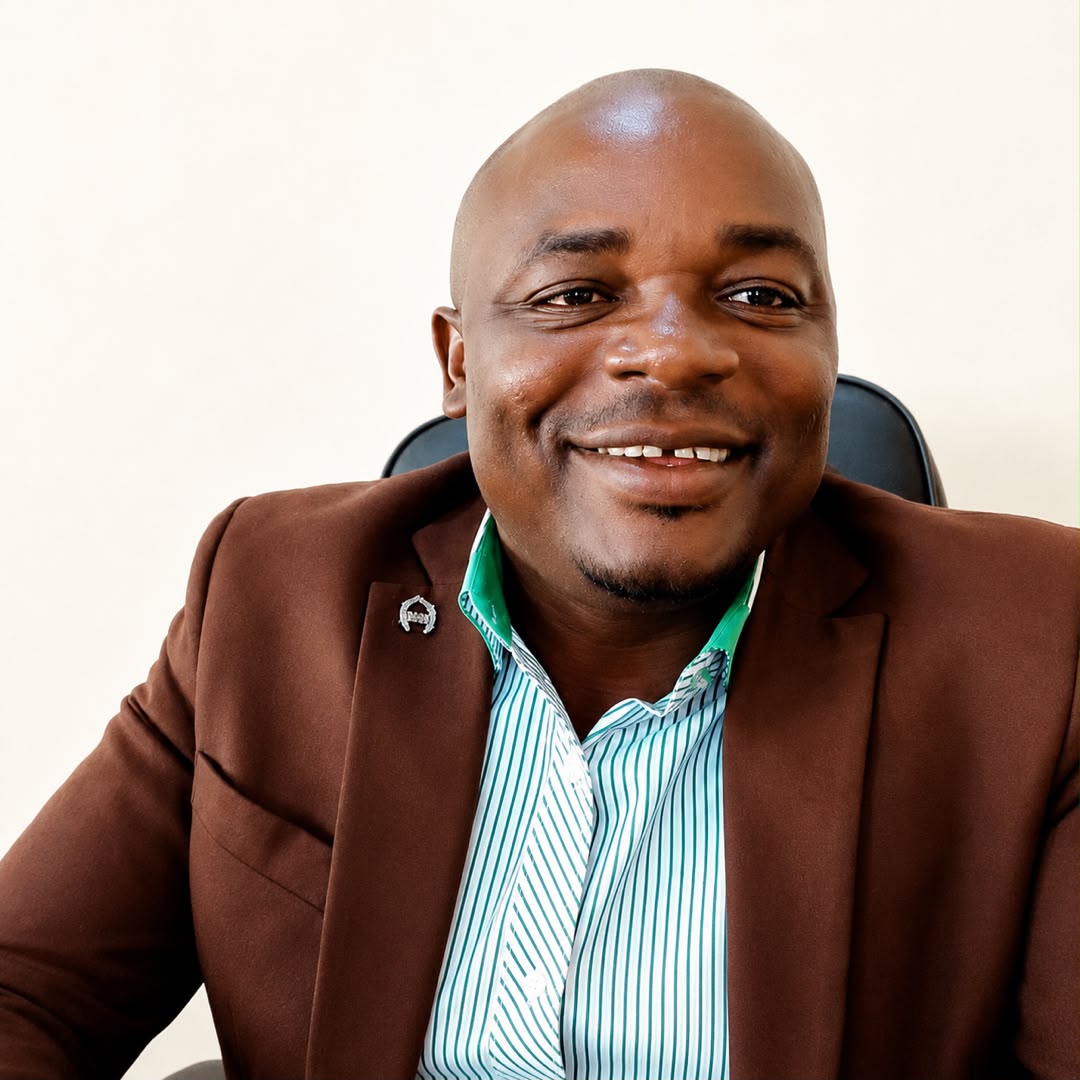
By Ewere Okonta, PhD
08037383019
eob.org.ng
Artificial Intelligence (AI) has quietly moved from the pages of science fiction into the very fabric of everyday human life. It is no longer a distant technological possibility; it is already influencing how we learn, work, communicate, conduct business, make decisions and solve problems. From education and healthcare to agriculture, entertainment, manufacturing, politics and commerce, AI has disrupted traditional ways of doing things and introduced possibilities that were unimaginable only a few years ago.
Nowhere is this transformation more evident than in the educational sector.
As an educator in the tertiary institution, I have witnessed first-hand how AI has changed the way we approach teaching, learning and research. AI-powered tools have become useful assistants in research writing, lesson planning, teaching methodology, curriculum development, data analysis, content creation and academic preparation. They have considerably improved productivity by helping educators achieve more in less time.
The reality, therefore, is that AI is not coming to education. AI is already here.
The question is no longer whether students should use AI. The more important question is how they should use it.
It would be foolhardy for educational institutions to continue pretending that AI can be stopped at the classroom door. Some students today have access to AI tools, resources and information-processing capabilities that may even surpass those available to some of their lecturers. A lecturer who simply bans AI without understanding it may unintentionally create a wider gap between himself and the students he is expected to teach.
The better approach is to embrace the technology while establishing clear ethical boundaries.
There is an important shift taking place in how intelligence is perceived. Traditionally, a person's intellectual ability was often assessed by how well he or she answered questions. In the age of AI, however, intelligence is increasingly demonstrated by the ability to ask the right questions. The quality of the prompt can determine the quality of the response.
This development has profound implications for education.
If students can generate essays, analyse data, summarise books, develop presentations, write computer programmes and explore complex academic concepts with AI, educators must move beyond assessing only the final product. We must increasingly assess critical thinking, originality, problem-solving ability, interpretation, application and the student's ability to defend the work submitted.
The danger is not AI itself. The danger is the unethical use of AI.
There is a difference between using AI as an academic assistant and allowing AI to become a substitute for one's intellectual effort. A student who uses AI to brainstorm ideas, improve grammar, explore alternative perspectives or understand a difficult concept is using technology differently from a student who simply generates an assignment with AI and submits it as entirely original work without understanding its content.
The same ethical principle must apply to lecturers and researchers. AI can assist with research design, literature exploration, editing, lesson preparation and other academic activities, but intellectual responsibility remains with the human user. Researchers must verify AI-generated information, acknowledge appropriate use, protect confidential data, respect intellectual property and remain accountable for the accuracy and originality of their work.
In other words, AI should augment human intelligence, not replace it.
This is why Nigeria urgently needs a comprehensive national policy on the ethical use of AI in education. Such a policy should provide clear guidelines for students, lecturers, researchers, administrators and educational institutions. It should address academic integrity, plagiarism, authorship, data privacy, intellectual property, assessment, transparency, responsible research and the appropriate disclosure of AI-assisted work.
While waiting for a national framework, universities, polytechnics, colleges of education and other institutions should not remain passive. Each institution should develop and implement its own AI-in-education policy based on its peculiar academic environment, while aligning such policies with emerging national and international standards.
When the national policy eventually becomes fully operational, institutional frameworks can be harmonised with it to achieve national cohesion.
We must also train our educators. It is not enough to tell lecturers and students that AI is dangerous. We must teach them how it works, what it can do, where it can fail and how it should be used responsibly. AI literacy should become an essential component of modern education.
The classroom of the future will not necessarily be one where students are forbidden from using AI. Rather, it will be one where students are taught to think with AI without surrendering their ability to think independently.
Technology has always changed education. The printing press changed access to knowledge. The internet changed information access. Smartphones changed communication. AI is now changing how knowledge is created, processed and applied.
We cannot stop the tide by building a wall around the classroom.
We must learn to navigate it.
The task before educators is therefore not to fight AI but to guide its use. We must produce graduates who can use powerful technologies without becoming intellectually dependent on them; researchers who can employ AI without compromising academic integrity; and lecturers who can integrate AI into teaching without losing the human element that remains at the heart of education.
AI has disrupted the way we do things. Education must now teach us how to use that disruption responsibly.
The future does not belong to those who reject AI. Neither does it belong to those who blindly depend on it.
It belongs to those who understand it, question it, verify it and use it ethically.
Dr. Ewere Okonta is the Chief Executive Officer of EOB Media, a passionate advocate for family values and societal development. He is a lecturer in the Department of Business Administration, University of Delta, Agbor.
Comments (0)
No comments yet. Be the first to share your thoughts!
Leave a Comment