

By Ewere Okonta, PhD
08037383019
eob.org.ng
“You can hardly see a great researcher that is working alone”
- Prof Eric Eboh
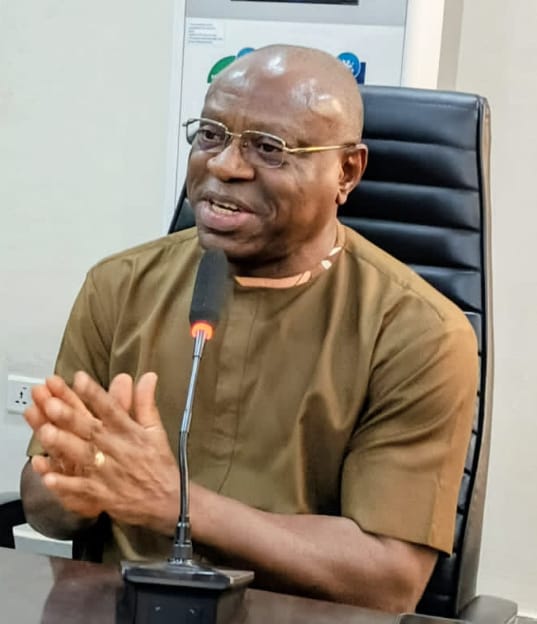
The Vice Chancellor of the University of Delta, Agbor (UNIDEL), Prof. Eric Eboh, has inaugurated 77 Multidisciplinary Research Groups, describing them as the building blocks of the university’s emerging research ecosystem.
The inauguration took place today at the Red Chambers, Owa Oyibu Campus, where the Vice Chancellor challenged members of the groups to see research not merely as an academic requirement but as a critical driver of institutional growth, innovation and societal development.
Walking into the hall at about 12:25 p.m., Prof. Eboh immediately set an informal tone, telling the lecturers: “I’m here to address you as a researcher and not as your Vice Chancellor.”
He said the initiative was firmly aligned with the university’s Project RAISE UNIDEL strategy, particularly its pillars of Research and Innovation (R) and Academic Excellence (A).
“Today’s event will be anchored on the R and A strategy, which are Research and Innovation, and Academic Excellence,” he said, stressing that both could not be separated.
“We cannot divorce research from academic excellence. No university will survive without research,” the Vice Chancellor added.
Why Multidisciplinary Research Groups?
For UNIDEL, the idea goes beyond simply putting researchers together under a common name.
A multidisciplinary research group is a team of researchers drawn from two or more academic disciplines who collaborate on a defined, multidimensional research problem, theme or project. Each researcher brings the knowledge, methods and perspectives of their discipline to achieve broader shared research objectives and outputs.
Prof. Eboh explained that the 77 groups are expected to become important components of the university’s research landscape.
They are, among other things, the building blocks of the UNIDEL research ecosystem, the engine room of research production and productivity, and thematic activity clusters within the university’s research landscape.
The groups are also expected to serve as breeding grounds for research mentorship and networking, while providing a springboard for the transformation of UNIDEL’s research management model.
Perhaps just as importantly, they are expected to create stronger connection points for researchers seeking collaborations with colleagues, institutions, research networks and foundations both within Nigeria and internationally.
The initiative also reinforces one of the core mandates of the university: teaching, research and community service.
Why Does UNIDEL Need Research Groups?
The answer, according to the university leadership, is simple: complex problems increasingly require different areas of expertise working together.
Rather than researchers working in isolation, multidisciplinary teams can pool complementary knowledge and skills to address problems from different perspectives.
Such collaboration, the Vice Chancellor noted, can lead to bigger and better research outcomes, greater productivity and visibility, and research with stronger scientific and social impact.
The groups are also expected to strengthen UNIDEL researchers’ ability to compete for research funding.
By working collectively, researchers can pursue larger research grants and attract greater institutional support, while presenting funders with the confidence that comes from a structured team with complementary expertise.
How Will the Groups Work?
The Vice Chancellor outlined a practical approach to the operation of the groups.
The process will begin with brainstorming sessions, where researchers can identify problems, generate ideas and explore areas of common interest.
This will be followed by the group development of research proposals, with team leaders expected to coordinate the process and provide direction.
Research seminars and workshops will also form an important part of the groups’ activities, providing opportunities for members to share ideas, sharpen research concepts, learn from one another and improve the quality of their research outputs.
VC Pledges Institutional Support
For the 77 groups to succeed, Prof. Eboh said the university would provide institutional support.
He pledged seed grants for all the research groups to enable them to take off and sustain their activities, including support for online research engagement.
He also promised that UNIDEL would promote the groups and give them global visibility by showcasing their membership, activities, outputs and publications through the university’s webpages.
According to him, the university will further support the groups with targeted training, seminars and workshops.
The researchers will also be exposed to opportunities and mechanisms for research collaboration and linkages with research institutions, research networks and research foundations within and outside Nigeria.
The idea is to ensure that the groups do not remain confined to the university but become active participants in the wider research community.
Research Funding Takes Centre Stage
Earlier in the programme, the Director of Research and Innovation, Dr. Benedict Azu, expressed appreciation to the Vice Chancellor and his management team for the support extended to the Directorate.
He acknowledged the importance of the administration’s commitment to strengthening research and innovation at UNIDEL.
The participants also benefited from a practical session led by Dr. Ernest Chukwuka, who took them through how to write fundable research concept notes and proposals for the TETFund National Research Fund (NRF).
The session provided researchers with insights into the demands of competitive research funding and the importance of presenting research ideas in ways that demonstrate relevance, originality, feasibility and potential impact.
A New Chapter for Research at UNIDEL
By the end of the session, the message from the Vice Chancellor was clear: the inauguration of the 77 research groups is not meant to be another event on the university calendar.
It is intended to mark the beginning of a more deliberate and collaborative research culture at UNIDEL.
Prof. Eboh thanked the participants for their attendance and urged them to take the initiative seriously, reminding them of the responsibility that comes with being part of the university’s research ecosystem.
For the researchers gathered at the Red Chambers, the task now moves beyond inauguration.
The real work is to transform ideas into research proposals, proposals into funded projects, and projects into knowledge, innovation and solutions that can make a measurable difference to the university, the economy and society.
Dr Ewere Okonta is the CEO of EOB Media, a family-values advocate, teacher and writer. He writes from the Department of Business Administration, University of Delta, Agbor.


Comments (0)
No comments yet. Be the first to share your thoughts!
Leave a Comment