

By Ewere Okonta, PhD
08037383019
eob.org.ng
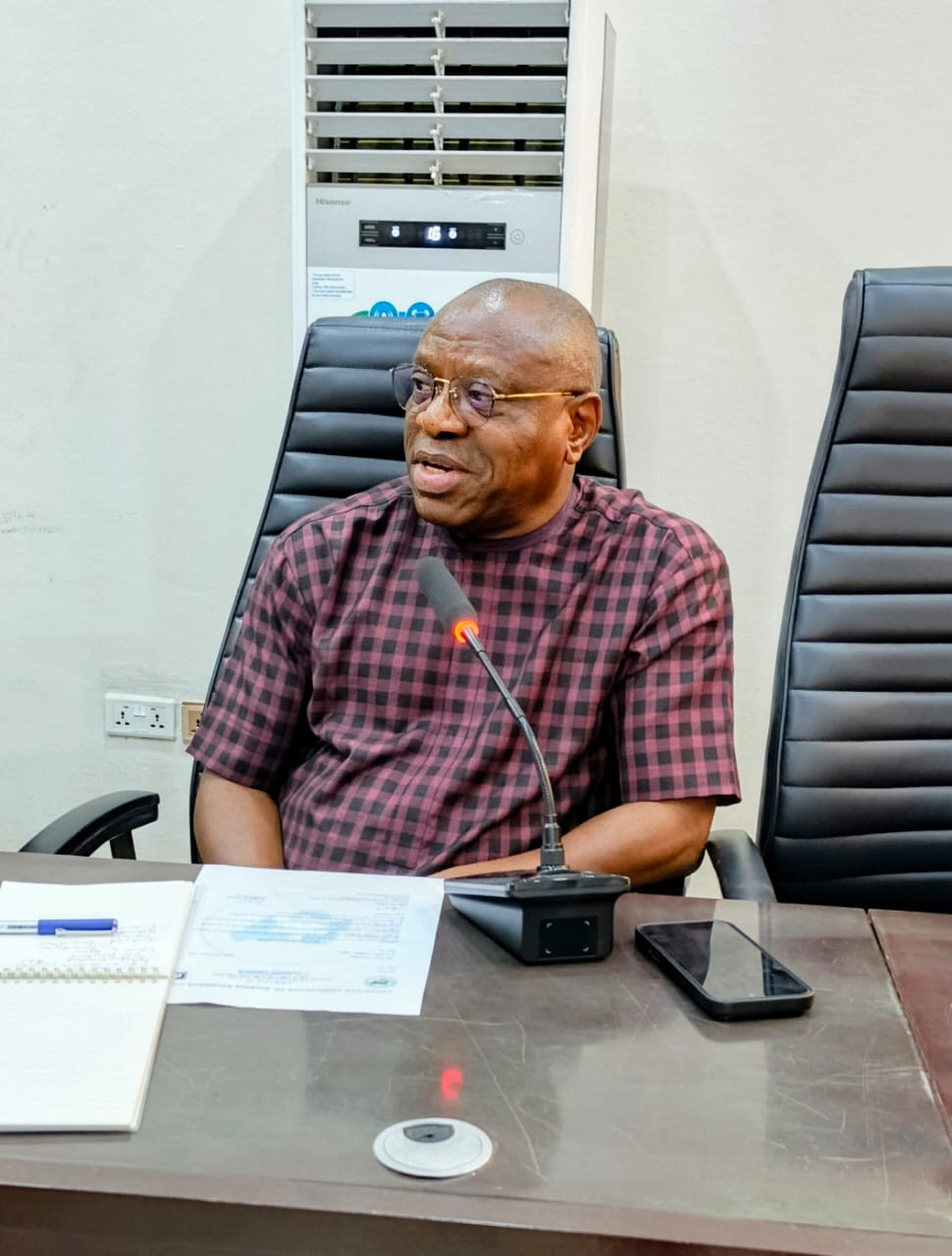
The University of Delta, Agbor (UNIDEL), has concluded the 2025/2026 academic session with the successful completion of its second-semester examinations, further demonstrating the institution’s sustained commitment to academic excellence and institutional discipline under the leadership of its second substantive Vice-Chancellor, Professor Eric Chiedum Eboh.
Following the conclusion of the examinations on Friday, July 17, 2026, the university has proceeded on the 2025/2026 sessional break. Students residing in the university hostels at Owa-Oyibu and Owa-Alero are expected to vacate the hostels by Saturday, July 18, 2026, while academic activities for the 2026/2027 session will resume on Monday, September 28, 2026.
Although the conclusion of an academic session may appear routine, the orderly completion of the academic calendar reflects a broader institutional culture that has continued to take shape under Professor Eboh’s administration. Since assuming office, the Vice-Chancellor has pursued a leadership philosophy centred on academic excellence, administrative efficiency, staff welfare, student-centred governance, institutional integrity and strengthened relationships with host communities.
This vision is encapsulated in Project RAISE UNIDEL Higher.
The project represents a deliberate commitment to elevate every aspect of the university’s operations. Its focus extends beyond academic performance to include efficient administration, improved staff morale, enhanced student experience, stronger stakeholder relationships and the sustained development of UNIDEL as a competitive institution of higher learning.
Sustaining Academic Excellence
At the heart of any credible university is the integrity of its academic processes. The value of a university is determined not only by its infrastructure or population but also by the quality of its teaching, learning, research, assessment and graduates.
Under Professor Eboh, academic excellence and integrity have remained central to the university’s institutional direction. The successful completion of the 2025/2026 academic session and the conclusion of the second-semester examinations reflect the importance attached to academic order, adherence to the approved calendar and the credibility of the university’s academic processes.
A university that protects the integrity of its examinations protects the value of its certificates. A university that maintains academic standards protects the future of its students.
This is the foundation upon which Project RAISE UNIDEL Higher is being built.
A Modern CEO at the Helm
The contemporary university is a complex institution. It is simultaneously an academic community, a research centre, an employer, a social institution and a major stakeholder in its host environment.
Consequently, the modern Vice-Chancellor must possess more than academic credentials. The office requires strategic vision, negotiation skills, administrative competence, diplomatic ability and a strong understanding of institutional management.
Professor Eboh has demonstrated these qualities in his approach to the administration of UNIDEL.
As the chief executive of the university, he has engaged stakeholders, negotiated institutional opportunities and managed relationships with the dexterity expected of a 21st-century corporate executive. His approach reflects an understanding that the growth of a university requires partnerships, strategic engagement and the ability to convert opportunities into institutional value.
In this regard, the Vice-Chancellor’s leadership style is increasingly reminiscent of the modern CEO of a major global corporation: strategic in outlook, deliberate in execution and focused on measurable institutional progress.
Efficiency as a Management Principle
One of the defining features of the current administration is its emphasis on administrative responsiveness.
Professor Eboh’s commitment that no file should remain unattended to for more than 24 hours represents more than an administrative directive. It reflects a broader philosophy of efficiency and accountability.
In any institution, administrative delays can have far-reaching consequences. A delayed file can hold up a decision, frustrate an employee, postpone an opportunity or affect the delivery of essential services.
By prioritising prompt attention to official matters, the administration is reinforcing the principle that the university must remain responsive, efficient and functional.
The message is clear: bureaucracy must facilitate institutional progress rather than impede it.
Staff Welfare and Management Cohesion
No institution can achieve sustainable progress without the commitment of its workforce.
Academic and non-academic staff constitute the foundation upon which the university’s daily operations rest. Their welfare, morale and relationship with management therefore remain critical to institutional productivity.
Under Professor Eboh, staff welfare has remained a significant component of the administration’s priorities. The relationship among management staff has also been characterised by cooperation and institutional cohesion.
This is particularly important because the successful administration of a university requires collective leadership. The Vice-Chancellor cannot achieve institutional transformation alone. The Registrar, Bursar, Librarian, Deans, Heads of Departments and the entire workforce must operate within a framework of cooperation and shared responsibility.
A cohesive management team creates the conditions for effective decision-making and institutional stability.
When Students Are Treated Like Kings
The primary purpose of a university is to educate and develop its students.
For this reason, student welfare and experience must remain central to institutional governance.
Under the current administration, students have continued to occupy an important position in the university’s management philosophy. Their academic needs, welfare, security and overall experience are treated as essential components of institutional development.
Treating students with dignity does not mean compromising discipline or academic standards. Rather, it means recognising them as important stakeholders whose experience significantly influences the reputation and future of the institution.
A university that values its students is more likely to produce graduates who value the institution.
Strengthening Host Community Relations
The relationship between a university and its host communities is critical to institutional stability and growth.
A university does not exist in isolation from its environment. It must maintain constructive relationships with the people and communities within which it operates.
Professor Eboh’s administration has continued to strengthen the relationship between UNIDEL and its host communities by promoting engagement, understanding and mutual respect.
This approach recognises that the success of the university is closely connected to the development and stability of its host environment.
The objective is not merely coexistence but meaningful integration.
The Strength of Quiet Leadership
Perhaps one of the most distinctive aspects of Professor Eboh’s administration is its simplicity.
In an age when leadership is often accompanied by constant publicity and elaborate declarations, the Vice-Chancellor has largely demonstrated a quieter approach to governance.
His leadership has focused on institutional processes, administrative efficiency, stakeholder engagement and the gradual consolidation of academic standards.
The result is a style of governance in which achievements are allowed to speak for themselves.
There is considerable strength in this approach.
Effective leadership is not necessarily measured by the frequency of public declarations but by the quality of decisions, the efficiency of systems and the impact of policies on the people and institution being governed.
In this regard, Professor Eboh’s simplicity has become one of the defining features of his administration.
UNIDEL’s Journey Continues
As the University of Delta proceeds on the 2025/2026 sessional break, the institution is entering a period of reflection, evaluation and preparation for the next academic session.
The challenges confronting the Nigerian university system remain significant. Universities must respond to changing technologies, evolving labour-market demands, increasing expectations from students and parents, and the growing need for global competitiveness.
UNIDEL must therefore continue to evolve.
Its academic standards must remain protected.
Its administrative systems must become more efficient.
Its staff must continue to receive appropriate support.
Its students must remain central to institutional planning.
Its host communities must remain valued partners.
And its reputation must continue to grow.
These objectives are at the heart of Project RAISE UNIDEL Higher.
Under Professor Eric Eboh, the University of Delta, Agbor appears to be pursuing this vision through a combination of strategic leadership, institutional discipline, stakeholder engagement and quiet administrative consistency.
The conclusion of the 2025/2026 academic session is therefore more than the end of another academic calendar. It is also an opportunity to recognise the steady institutional progress taking place at UNIDEL.
The university is moving forward.
Its academic standards are being sustained.
Its administrative processes are being strengthened.
Its relationships are being consolidated.
Its students are being prioritised.
Its staff welfare remains important.
And its institutional future is being deliberately shaped.
Project RAISE UNIDEL Higher is not merely a slogan. It is becoming a governing philosophy.
And under the strategic leadership of Professor Eric Eboh, the University of Delta, Agbor is steadily demonstrating that institutional transformation does not always require noise.
Sometimes, it requires vision, discipline, consistency and the quiet determination to make the university better than it was yesterday.
Dr Ewere Okonta is the CEO of EOB Media. He writes from the Department of Business Administration, University of Delta, Agbor.



Comments (0)
No comments yet. Be the first to share your thoughts!
Leave a Comment