

By Ewere Okonta
08037383019
eob.org.ng
There was a time when hygiene was seen as a simple domestic responsibility. Mothers shouted from kitchens, “Wash your hands before eating!” Teachers warned children against dirty fingernails. Hospitals preached sanitation. Churches linked cleanliness to godliness.
But today, in an era of smartphones, artificial intelligence, luxury lifestyles, and social media sophistication, one uncomfortable truth remains: many people still neglect basic hygiene.
And sadly, the consequences are becoming more dangerous than ever.
From crowded markets to corporate offices, from schools to public transport systems, from restaurants to hospitals, poor hygiene management is silently fueling diseases, infections, embarrassment, poor productivity, and even avoidable deaths.
This is not just a “village problem.” It is now a national public health concern.
The irony is painful: people spend heavily on expensive clothes, perfumes, hairstyles, gadgets, and flashy appearances, yet ignore the very basic habits that preserve health and dignity.
The body may look attractive outside while bacteria are organizing a conference underneath the fingernails.
Hygiene Is No Longer Optional
Many people think hygiene simply means bathing every morning. No. Hygiene is broader and deeper than that.
Good hygiene management includes:
- Proper handwashing
- Oral care
- Environmental cleanliness
- Food hygiene
- Menstrual hygiene
- Personal grooming
- Safe waste disposal
- Clean water usage
- Toilet sanitation
- Respiratory hygiene
One dirty environment can affect hundreds of lives. One careless food handler can poison an entire event. One unhygienic hospital practice can spread infections to vulnerable patients.
This is why hygiene is not merely personal anymore. It is collective survival.
The Nigerian Hygiene Crisis Nobody Wants To Discuss
Let us be honest with ourselves.
How many public toilets in Nigeria are truly hygienic?
How many people wash their hands properly after using the restroom?
How many food vendors wear gloves or maintain clean cooking spaces?
How many people cover their mouths when coughing or sneezing?
How many offices disinfect shared surfaces regularly?
How many households properly manage waste disposal?
The answers are frightening.
In many communities, refuse dumps compete with residential buildings. Drainages are blocked. Pure water sachets litter the streets. Gutters become breeding grounds for mosquitoes. Markets overflow with flies. Public convenience facilities become horror scenes.
Then we wonder why typhoid, cholera, diarrhea, skin infections, respiratory illnesses, and food poisoning continue to spread rapidly.
Disease loves dirt.
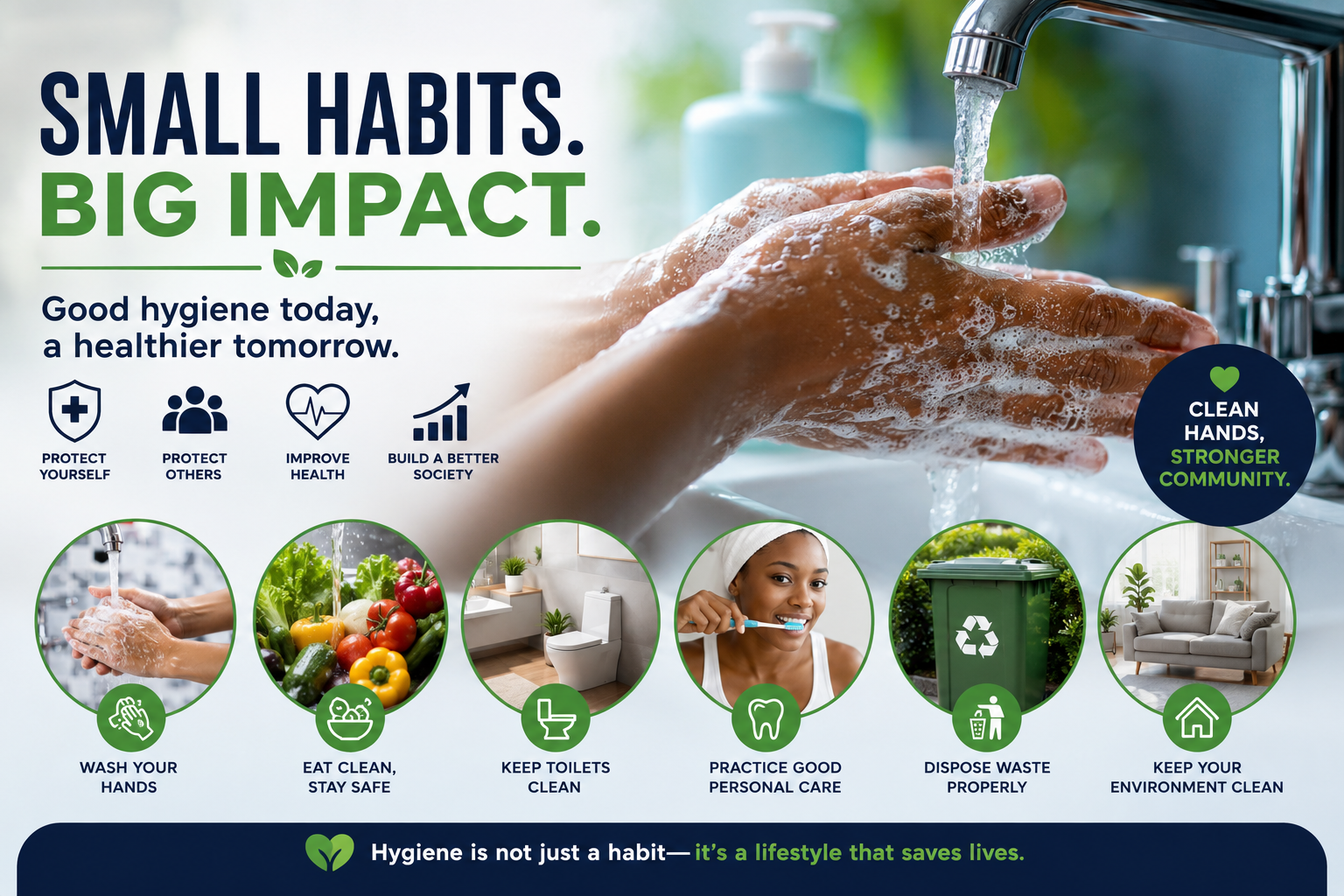
Your Hands Can Save Your Life
Medical experts repeatedly emphasize one simple practice: handwashing.
Yet it remains one of the most neglected health habits globally.
A simple act of washing hands with soap and clean water before eating and after using the restroom can drastically reduce infections.
Think about how many surfaces human hands touch daily:
- Door handles
- Mobile phones
- Currency notes
- Steering wheels
- Public rails
- Office desks
- Elevator buttons
- ATM machines
Now imagine touching your face or food immediately afterward without washing your hands.
That is how germs travel faster than gossip.
In fact, some studies suggest mobile phones may carry more bacteria than toilet seats because many people clean their toilets more frequently than their phones.
Disturbing, isn’t it?
The Hidden Cost of Poor Hygiene
Poor hygiene is not only a health issue. It is also an economic issue.
When workers fall sick frequently, productivity drops.
When students battle infections repeatedly, academic performance suffers.
When hospitals become overwhelmed with preventable illnesses, healthcare costs rise.
When tourists encounter filthy environments, national reputation declines.
Even businesses lose customers when hygiene standards are poor.
Nobody wants to eat in a dirty restaurant.
Nobody trusts a healthcare facility with poor sanitation.
Nobody enjoys living beside mountains of refuse.
Good hygiene is therefore not just about health. It is about development, confidence, dignity, and economic growth.
Menstrual Hygiene: The Conversation Society Avoids
One major hygiene topic still surrounded by silence in many societies is menstrual hygiene.
Many young girls lack access to sanitary products, clean toilets, or proper education about menstrual care. Some resort to unsafe alternatives due to poverty or shame.
This is dangerous.
Poor menstrual hygiene can lead to infections, low self-esteem, school absenteeism, and emotional trauma.
Society must stop treating menstrual discussions like forbidden conversations. Hygiene education should begin early and be normalized both at home and in schools.
Mental Health and Hygiene Are Connected
Interestingly, hygiene also affects mental health.
A clean environment often improves mood, confidence, and emotional stability. Cluttered, dirty, and chaotic spaces can increase stress and anxiety.
People struggling with severe depression sometimes neglect personal hygiene completely, which further worsens isolation and low self-worth.
This is why healthcare professionals now increasingly connect environmental wellness with emotional wellness.
Clean surroundings create psychological calmness.
Hygiene in the Age of Social Media
We now live in a generation obsessed with appearance.
People filter photos but ignore unhealthy lifestyles.
Some individuals spend hours editing pictures online while living in unhealthy environments offline.
True cleanliness is not Instagram packaging.
It is discipline.
It is responsibility.
It is respect for oneself and others.
No amount of fashion can cover poor hygiene for long.
Eventually, the body speaks.
The Government Also Has Responsibilities
Citizens must maintain personal hygiene, yes. But government institutions also have enormous responsibilities.
Access to clean water, proper waste disposal systems, functional drainage, environmental regulations, and public health education are essential.
You cannot preach hygiene to communities without clean water.
You cannot expect sanitation where refuse evacuation systems are absent.
You cannot promote public health while allowing environmental decay.
Public health policies must move beyond speeches and become visible realities.
Cleanliness Is A Lifestyle, Not An Occasion
One of the biggest mistakes people make is treating hygiene like an event instead of a lifestyle.
Some clean only when visitors are coming.
Some maintain hygiene only during celebrations.
Some become temporarily sanitary during disease outbreaks.
But real hygiene is consistency.
It is the daily decision to protect yourself and others.
It is discipline nobody applauds but everybody benefits from.
Final Thoughts: Your Hygiene Is Your Signature
Long before you speak, your hygiene introduces you.
Your environment speaks.
Your body language speaks.
Your habits speak.
Good hygiene is not poverty or wealth dependent. It is mindset dependent.
Soap is cheaper than treatment.
Prevention is cheaper than hospitalization.
Cleanliness may look ordinary, but it saves lives quietly every single day.
In the end, hygiene is not merely about smelling nice or appearing neat.
It is about humanity protecting itself from avoidable suffering.
And perhaps the biggest lesson is this:
Sometimes, the simplest habits are the most powerful medicine.
Ewere Okonta is the CEO of EOB Media. He writes from the Department of Business Administration, University of Delta, Agbor.


Comments (0)
No comments yet. Be the first to share your thoughts!
Leave a Comment