

By Egajivwie Frank Odiri, PhD
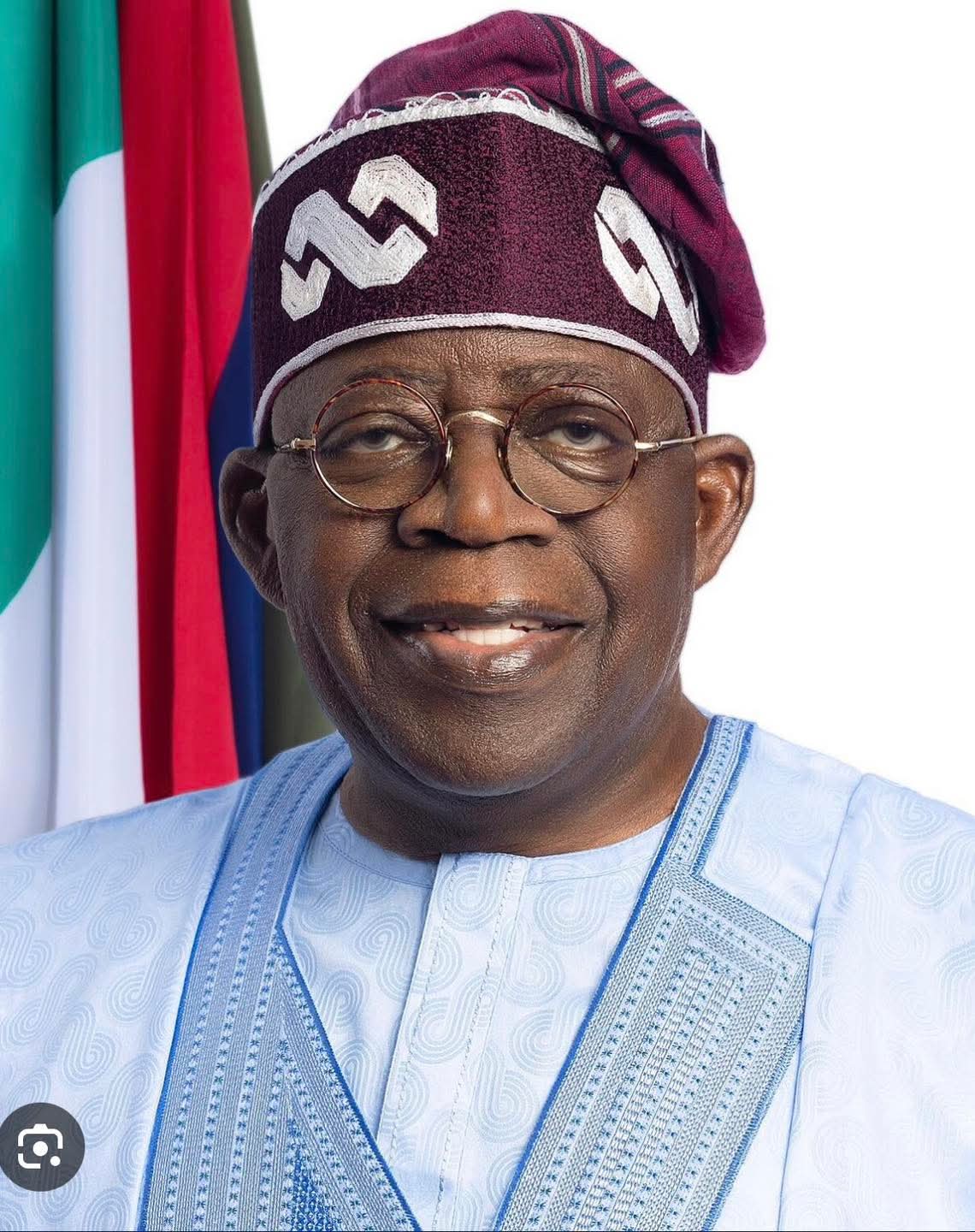
The interview in Kigali revealed not merely a President defending policies, but a leader projecting uncommon certainty in the direction of his administration. Across the interviews, President Bola Ahmed Tinubu consistently framed his economic reforms as unavoidable corrections to long-standing structural distortions rather than political convenience or rhetorical positioning.
What came through clearly in the discussions was the consistency of his message. On subsidy removal, fiscal responsibility, taxation, and governance reform, the President maintained a firm and unchanging line, one rooted in the belief that Nigeria’s economic challenges require deep structural adjustment rather than temporary or cosmetic solutions.
In one of the key exchanges, when asked whether mounting economic hardship could force a reversal or softening of reforms as political pressures increase, the President dismissed any suggestion of turning back. He defended the removal of fuel subsidy as an unavoidable economic necessity, describing it as wasteful and distortionary in a global economy. In his reasoning, sustaining such a system not only drains public resources but also fuels smuggling and inefficiency, making reform not a choice but an obligation.
When pressed on the pain Nigerians are experiencing as a result of these reforms, the President did not attempt to deny the hardship. Instead, he acknowledged it openly while insisting that reform processes are inherently difficult at the beginning. He framed the situation as one in which short-term discomfort is often the price for long-term national stability and recovery, stressing that meaningful transformation rarely comes without sacrifice.
On taxation and public expectations, when asked how government reconciles citizens’ demand for development with resistance to taxation, he emphasized the principle of shared responsibility. According to him, it is inconsistent to demand modern infrastructure such as roads, hospitals, and public services while resisting the fiscal obligations required to fund them. Development, he posited, cannot be sustained by aspiration alone but must be supported by collective contribution and civic responsibility.
When further asked what Nigerians should expect if he is elected for second tenure, "more work" , the President replied. He emphasized continuity, adaptation, and reform discipline. He noted that governance requires constant adjustment in response to global and domestic realities, stressing that Nigeria must continue to “reset and rethink” its economic approach in order to remain competitive and stable in a rapidly changing world.
In sum, the tone of the interviews reflected a President who spoke with firm conviction rather than hesitation. His responses consistently projected confidence in the direction of his reforms, presenting them not as experimental policies but as necessary interventions aimed at correcting deep structural weaknesses in the economy.
This posture reflects a form of leadership that prioritizes long-term national restructuring over short-term political comfort. The firmness with which he defended subsidy removal, fiscal discipline, and taxation logic suggests a leader who is willing to absorb present criticism in pursuit of future stability.
In a political environment where policy reversal is often triggered by public pressure, such consistency can be interpreted as resolve rather than rigidity.
As the writer has often maintained that Nigeria’s economic challenges did not emerge overnight and therefore cannot be resolved through quick fixes. In that context, Tinubu’s message reinforces the view that painful transitions are sometimes necessary for structural correction, and that leadership is most tested not in moments of popularity, but in moments of difficult decision-making.
Ultimately, the Kigali interviews served as a stage for reaffirming a governing philosophy anchored on discipline, reform continuity, and economic realism. Whether viewed through the lens of policy analysis or political support, the message remained unmistakably consistent: Nigeria, in the President’s framing, is undergoing a necessary transition toward a more sustainable economic order.
#Godblessnigeria
Comments (0)
No comments yet. Be the first to share your thoughts!
Leave a Comment