


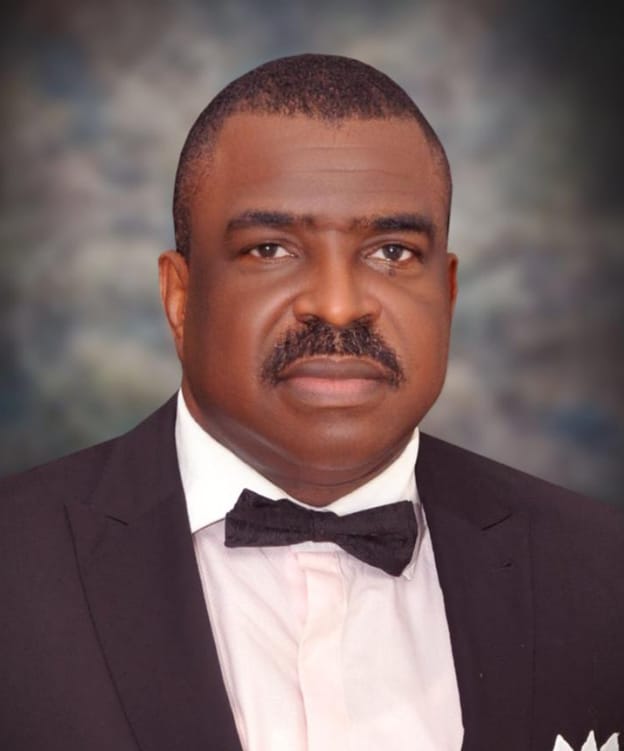
By Dr Donald Peterson
There's a particular kind of blindness that comes from standing too close to your own moment in history. You can feel that something is shifting, sense the tremors beneath established institutions, notice how the old certainties your parents lived by no longer hold the same gravitational force. But you can't quite see the full architecture of what's being built in their place.
Let me be direct: we are living through the most dramatic reorganization of human capital value in modern history. And if you're a young person in Delta State, particularly in Ika, this isn't abstract theory. It's the difference between building something that matters and spending your prime years chasing opportunities that evaporated before you even arrived.
The uncomfortable truth is that geography has stopped being destiny, but only for those who recognize what that actually means.
Your parents, if they were fortunate, followed a script that made sense. Education, certification, employment, progression. The script worked because the world changed slowly enough that what you learned at twenty remained valuable at forty. Institutions were stable. Credentials were durable. Patience was rewarded.
That world is gone. Not diminished, not challenged, actually gone.
Consider what's happened just in the last five years. Entire industries have been automated or outsourced. Professional certifications that once guaranteed employment now guarantee nothing. University degrees, while still valuable, have become necessary but insufficient. The half-life of technical skills has collapsed from decades to months in some fields.
And here's what troubles me most about conversations around youth empowerment in Nigeria: we're still using yesterday's language to describe tomorrow's problems. We talk about "getting a good job" in an economy where the fastest-growing companies have nearly zero employees. We emphasize credentials in a world where demonstrable skill increasingly trumps paper qualifications. We prepare young people for stability in an era defined by permanent disruption.
This isn't pessimism. It's pattern recognition.
There's something specific I want to address to those of you from Ika Nation, because there's a paradox embedded in your inheritance that you need to understand.
Historically, Ika people have been traders, entrepreneurs, builders of commercial networks that spanned regions. Your ancestors didn't wait for employment. They created value, identified arbitrage opportunities, built trust networks that became economic engines. This wasn't romantic. It was survival transmuted into sophistication.
But somewhere in the last two generations, something shifted. The allure of stable employment, professional titles, government positions became so strong that it almost eclipsed the entrepreneurial inheritance. And I understand why. Security is seductive, especially when you've watched previous generations struggle.
Here's the paradox: just as many young people in Ika began optimizing for employment and credentials, the global economy began rewarding exactly the traits your great-grandparents embodied. Resourcefulness, Adaptability. The ability to create value without permission. The courage to build in uncertain environments.
You have a cultural inheritance that is suddenly, unexpectedly relevant again. But only if you update the toolkit.
A trader in 1950 needed social intelligence, mathematical literacy, understanding of supply chains, and the ability to assess risk. A digital entrepreneur in 2025 needs exactly those things, plus technical literacy, global market awareness, platform fluency, and the ability to leverage technology for scale.
The question is whether you'll recognize the through-line or get stuck romanticizing the past while missing the future.
Let me tell you something that might sound contradictory: you are simultaneously more disadvantaged and more empowered than any previous generation of Nigerian youth.
More disadvantaged because the infrastructure is still inadequate. Because capital is scarce. Because the institutional support systems that exist in developed economies are either absent or corrupt here. Because power supply is unreliable and internet connectivity is inconsistent and the basic foundations you need to compete globally are harder to access.
But also more empowered because for the first time in human history, your physical location matters less than your skill level and your ability to deliver value. A designer in Agbor can serve clients in Amsterdam. A developer in Boji-Boji can build products for users in Boston. A content creator anywhere can reach audiences everywhere.
This is the asymmetry that matters: the barriers to entry in the physical world remain high, but the barriers to entry in the digital economy have collapsed to nearly zero.
Except for one barrier: Skill.
And this is where most of the conversation around youth empowerment goes wrong. We act like enthusiasm and effort are enough. Like wanting something badly will make it materialize. But the uncomfortable reality is that the global digital economy is viciously meritocratic. It doesn't care about your story. It doesn't grade on a curve based on your infrastructure challenges. It cares whether you can deliver value. Whether you can solve problems. Whether you can do the thing you said you could do.
Which means the only rational response is to become undeniably competent.
There's a concept in economics called path dependence. The decisions you make early constrain or expand your options later. The skills you build in your twenties determine the opportunities available in your thirties and forties. What feels like a small choice today, choosing to upskill or choosing to coast, compounds over time into dramatically different trajectories.
Think about it mathematically. If you improve by just 1% every week for a year, you haven't improved by 52%. You've improved by nearly 68% because of compounding. But if you stagnate while the world around you accelerates, you're not staying in place. You're falling behind at an increasing rate.
This is why I find casual approaches to personal development almost offensive. Not because I think everyone needs to be hyperproductive or obsessed with optimization, but because the gap between those who are intentionally building capabilities and those who aren't is widening at an unprecedented pace.
Five years from now, the labor market in Nigeria and globally will be radically different. Artificial intelligence will have automated significant portions of entry-level knowledge work. Remote work will have normalized even further. The competition for opportunities won't be local or even national. It will be global.
You will be competing with someone in the Philippines who spent the last five years mastering digital marketing. With someone in India who can code in seven languages. With someone in Kenya who built a portfolio of real projects while you were still figuring out what you wanted to do.
Unless you make a different choice. Unless you compress your learning curve. Unless you build capabilities that create asymmetric advantages.
I'm going to say something that might sound like promotion but is actually analysis: platforms like Honor Summit exist because the traditional education system is structurally incapable of keeping pace with the rate of change.
Universities are not designed for agility. They move slowly, update curricula sporadically, optimize for theory over practice. By the time a course gets approved, taught, and certified, the underlying technology or methodology has often already evolved. This isn't a criticism of educators. It's recognition of institutional constraints.
What young people need now is not more theory. It's applied, relevant, immediately useful skills. It's frameworks that can be implemented. It's exposure to tools and platforms that are actually being used in the market right now. It's community with others who are also building, so you can learn from collective experience rather than isolated struggle.
Honor Summit addresses this gap not because it's revolutionary but because it's responsive. It recognizes that a young person in Ika who wants to build a career in tech or digital business or modern entrepreneurship can't wait four years for a degree program to maybe cover what they need. They need to learn now, build now and create proof of competence now.
And here's what makes it particularly relevant for this moment: it's not about replacing formal education. It's about augmenting it. About filling the gaps. About giving you the practical capabilities that complement whatever theoretical foundation you're building elsewhere.
To be honest, if I were twenty-two right now, looking at the landscape, understanding the compression of opportunity windows, I would be almost manic about skills acquisition. Not in a scattered way, not trying to learn everything at once, but with focused intensity on building a portfolio of demonstrable capabilities.
Because the thesis is simple: in a world where credentials are commoditized and networks can be built digitally, the only sustainable competitive advantage is the ability to do valuable things that most people can't.
Here's what keeps me up at night when I think about young people in Delta State: I see so much potential energy that never gets converted to kinetic energy. So much talent that never finds expression. So many young people who could build extraordinary things if they just had the right frameworks, the right skills, the right confidence that comes from competence.
And I see the window closing. Not because opportunities are disappearing, but because the gap between prepared and unprepared is widening so fast that it's becoming almost unbridgeable.
If you start building capabilities today, seriously, intentionally, with the kind of focus that compounds over time, you can position yourself in the top tier of your generation. The opportunities that will exist in 2030 will be claimed by people who spent 2025 through 2029 preparing for them.
But if you wait, if you coast, if you tell yourself you'll figure it out later, later becomes never. Because everyone else is moving. The world is accelerating. And standing still is falling behind.
I'm not here to beg anyone to take their own future seriously. You're adults or nearly so. You'll make your own choices and live with the consequences.
But I am here to tell you what I see from where I stand. I see an economic transformation that will create unprecedented opportunities for those who are prepared and unprecedented challenges for those who aren't. I see a moment in history where being young in Ika doesn't have to mean being disadvantaged, if you're willing to build the capabilities that transcend geography.
And I see platforms like Honor Summit not as silver bullets but as practical responses to a real need. A way to compress your learning curve. A way to build skills that matter. A way to join a community of others who understand that the next five years will determine the next fifty.
The choice, as always, is yours. But choose with your eyes open. Choose understanding what's at stake. Choose recognizing that this moment, right now, is more consequential than it feels.
Your ancestors built trading empires with ledgers and trust. You have the internet, digital platforms, and global markets.
What will you build?


Comments (0)
No comments yet. Be the first to share your thoughts!
Leave a Comment