


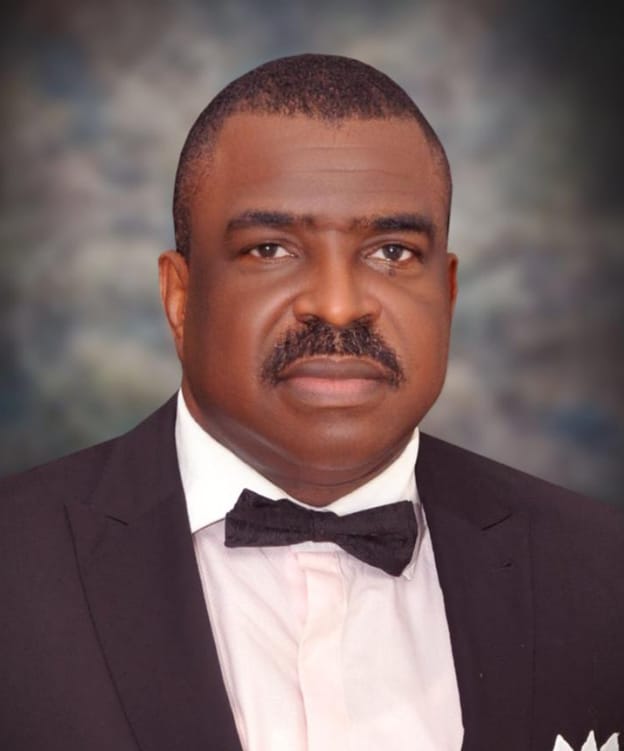
By Dr. Donald Onyibe Peterson
Author, The Audacity of Vision
Nigeria from 2015 to 2026, and the Question of What Reform Is Actually For
There is a particular cruelty built into the economics of reform, and I think it explains most of what has happened to Nigerian public opinion over the last three years. The costs of correction arrive immediately. They arrive at the pump, at the market stall, in the transport fare a trader pays before she has sold anything. The benefits arrive late, arrive quietly, and arrive first as abstractions: a reserve number, a rating notch, a line in a Fund report. No household has ever eaten a current account surplus.
So when a government asks a people to endure the first in expectation of the second, it is asking for something close to faith. And faith, in a country where governments have disappointed with such reliability, is expensive.
What follows is an attempt to lay out the ledger honestly. Not the triumphalist version, which insults people who are still struggling, and not the nihilist version, which pretends nothing has moved. Just the arithmetic, as best as I can reconstruct it, from where we stood in 2015 to where we stand in the middle of 2026.
I. What 2015 Actually Was
We tend to remember 2015 fondly, which is itself a symptom. Nostalgia is what happens when you compare a remembered price level to a current one and forget everything else in the frame.
The truth is that 2015 was not a plateau. It was the top of a slide. Brent had been above $110 in the middle of 2014; by early 2016 it was under $30. For an economy that drew the overwhelming share of its foreign exchange and a commanding share of federal revenue from a single commodity, this was not a bad quarter. It was a structural event.
The decision taken in response has shaped everything since. Rather than allow the currency to find its level against a collapsed export price, the authorities chose to defend it. What followed was not one exchange rate but a family of them: an official rate for the favoured, an interbank rate, an investors' and exporters' window, a Bureau de Change rate, and a street rate that told the actual truth. The distance between the first and the last was not a technical inconvenience. It was a subsidy, paid by everyone, collected by whoever had access to the allocation counter.
That gap became one of the great wealth transfers in our modern history. Not through theft in the crude sense, though there was plenty of that too, but through arbitrage, which is theft with paperwork.
By 2016 we were in recession. Output contracted by about 1.6 per cent. Inflation crossed into double digits and, remarkably, has not left since. Unemployment on the old methodology climbed from roughly 8 per cent in the second quarter of 2015 to more than 33 per cent by the end of 2020. Then COVID arrived and delivered a second contraction, roughly 1.8 per cent in 2020. Two recessions in five years, in a country adding some three million people to its labour force annually.
II. The Slow Degeneration, 2016 to 2023
Here is where I want to be precise, because "things got worse" is not analysis.
Three mechanisms did the damage, and they compounded.
The first was the petrol subsidy. Between 2016 and 2023 the country spent roughly N11.7 trillion sustaining it. By 2022 alone the bill had reached about N4.4 trillion, and projections for 2023 ran to figures that would have consumed the larger part of the entire federal budget. Every naira of it was borrowed or diverted. And here is the part that still irritates me: it was regressive. A household without a car, without a generator, without a freezer, subsidised the fuel consumption of households with all three, and subsidised the smuggling economy of neighbouring states besides.
The second was monetary financing. The overdraft the federal government ran with the Central Bank, the so-called Ways and Means, swelled to something in the region of N22 to N23 trillion by 2023, far beyond any statutory limit, and had to be securitised into long-dated bonds to be made respectable. This is, in plain language, printing money to pay bills. You cannot do that at scale and then act surprised when the currency loses its meaning. The inflation of 2023 and 2024 was not conjured by the reforms. It was seeded years earlier and merely came due.
The third was the revenue collapse relative to obligation. By the first nine months of 2022, debt servicing consumed about 99 per cent of federal revenue. Ninety-nine. Which is another way of saying that the government of Africa's most populous nation was, on a cash basis, working entirely for its creditors and funding everything else, salaries, roads, hospitals, schools, out of new borrowing. Public debt stood at roughly N77 trillion by mid-2023. Government revenue was around 7.3 per cent of GDP, among the lowest of any rated sovereign on earth.
And confidence had gone. Foreign investment inflow fell to about $655 million in a single quarter of 2023, the lowest reading since the series began in 2013. Investors were not being unkind. They simply could not price a country with four exchange rates and a central bank owing $7 billion in unsettled forward contracts.
That was the inheritance of May 2023. Not a difficult situation. A pre-crisis one.
III. The Two Decisions, and What They Cost
On 29 May 2023, from the podium, the subsidy was declared gone. Two and a half weeks later the exchange rate windows were collapsed into one and the naira was allowed to float.
I want to state the cost plainly, because any account that skips this section is propaganda.
Petrol moved from around N185 per litre to more than N600, and by late 2024 the cumulative increase approached 500 per cent. Since fuel underpins the overwhelming majority of our transport and logistics, and since more than half of Nigerian households generate their own electricity, this was not a fuel price shock. It was an everything shock. The naira, at roughly N460 to the dollar in mid-2023, fell towards N1,740 by late 2024. Headline inflation peaked above 34 per cent, with food inflation well above 40 per cent at its worst.
The human consequence was severe and is documented. The World Bank now puts the number of Nigerians below the national poverty line at around 139 million, against roughly 87 million in 2023. The poverty rate rose from about 40 per cent in 2019 to some 61 per cent by 2025. Around a third of the population is classified as ultra-poor, meaning food insecure by caloric measure. The Fund's Article IV this year noted roughly 27 million people facing food insecurity into 2026, and the World Food Programme has warned that close to 17 million in the conflict-affected north require urgent assistance.
Anyone who wishes to argue that the reforms were costless is arguing with the evidence. They were not. The protests of August 2024 were not manufactured. They were arithmetic expressing itself.
The honest defence is different, and I hold it. It is that the float did not create the loss of purchasing power. It disclosed it. The value had already been consumed, by years of monetary financing and by an artificial rate that only a fraction of the population could ever access. What the reform did was stop pretending, and move the loss from the hidden ledger to the visible one. That is not a comfortable argument to make to a woman whose garri has tripled. It is still true.
And on sequencing, the criticism has force. The palliatives were slow, thin and poorly targeted. The cash transfer architecture was not ready. The buses were not there. The shock could have been cushioned far better than it was, and the administration's own officials have more or less conceded this.
IV. The Architecture That Followed
What distinguishes this period from previous reform attempts, and it is worth saying, since 2012 and 2016 both collapsed under pressure, is that the shock was followed by construction rather than retreat.
On the currency and the monetary side. The forward backlog was cleared, which mattered more to investor psychology than anything else. Monetary policy was restored to orthodoxy: rates were raised hard and held, then eased only once disinflation was established, with the policy rate at 26.5 per cent after a February 2026 cut and the cash reserve ratio lowered by five points to 45 per cent. New market plumbing was installed: a formal FX trading platform, a non-resident bank verification framework to bring diaspora capital in through the front door, a proper overnight financing benchmark, and a banking sector recapitalisation to give the system the balance sheet to carry a larger economy. Average monthly FX turnover reached roughly $8.6 billion in 2025, with April 2026 alone approaching $10 billion. Depth is what kills arbitrage. Not decree.
On the fiscal side. Four Acts were signed in June 2025 and took effect on 1 January 2026: the Nigeria Tax Act, the Nigeria Tax Administration Act, the Nigeria Revenue Service Act and the Joint Revenue Board Act. Together they repealed and replaced almost the entire prior architecture, the personal income, companies income, VAT, capital gains, petroleum profits and stamp duty regimes. The design is more intelligent than its critics allow. Small companies, now defined generously at up to N100 million turnover, are exempted from company income tax, capital gains tax and the new development levy altogether. Large and multinational firms face a minimum effective rate of 15 per cent. Electronic invoicing has been rolled out to major taxpayers. And Executive Order 9 closed a structural leakage in oil revenue remittance that had for years allowed a portion of earnings to bypass the distributable pool.
On the real economy. Domestic refining came up, with the Dangote facility running near its 650,000 barrel per day capacity, which changes the country's import bill and therefore its external accounts in a way no monetary instrument could. Oil output stabilised in the 1.55 to 1.66 million barrel per day range after years of theft-driven decline.
On the social side. A national minimum wage of N70,000. And the student loan fund, which I think is the single most underrated policy of this administration: as of April 2026 it had disbursed N242.4 billion to 1,388,592 students across 288 institutions, interest free, with repayment deferred until two years after service. That is not a palliative. That is a generation of graduates who will not have dropped out.
V. Where the Numbers Stand, August 2026
Set the two columns beside each other.
Headline inflation: 22 to 29 per cent in 2023, rising to above 34 per cent. Today, 15.91 per cent as of June 2026.
Exchange rate windows: four or more in 2023. Today, one, with the gap between the official and Bureau de Change rate under 2 per cent.
External reserves: about $33 billion gross in 2023, with net reserves of only $3.9 billion. Today, $52.5 billion gross, a seventeen-year high, with net reserves above $34 billion.
Government revenue: 7.3 per cent of GDP in 2023. Projected at 12.4 per cent for 2026.
Debt-to-revenue ratio: roughly 500 per cent in 2023. Roughly 338 per cent today.
Annual tax collection: N12.3 trillion in 2023. N21.6 trillion in the first half of 2026 alone.
Tax-to-GDP: 10.3 per cent then. 13.0 per cent now.
Sovereign rating: downgraded and stagnant then. Upgraded by S&P in May 2026, the first such upgrade since 2012.
Growth reached about 4 per cent in 2025 and 3.89 per cent in the first quarter of 2026, the strongest first quarter in roughly a decade, with the Fund projecting 4.1 per cent for the year. Agriculture rebounded to 3.15 per cent from a near-flat 0.07 per cent a year earlier, which matters more than the headline because agriculture is where the poor actually work. The non-oil economy now accounts for over 96 per cent of output. The current account is projected to run a surplus near 5.8 per cent of GDP. Twelve-month average inflation to May 2026 was 18.36 per cent, against 30.57 per cent in the comparable period a year before.
That is not a rhetorical claim. That is a stabilised economy.
VI. But Has It Reached the People? Not Yet, and I Will Not Pretend Otherwise:
Here is where I part company with the more enthusiastic defenders of this record.
Macroeconomic stabilisation is a precondition for prosperity. It is not prosperity. And the transmission from one to the other is neither automatic nor quick.
Consider what the same mid-2026 data shows. Around 79 per cent of Nigerians are poor or vulnerable to falling into poverty. Unemployment sits near 30 per cent. More than 86 million citizens live without electricity. Three to four million young people enter the labour market every year into an economy that is not yet creating anything like that number of formal jobs. Food inflation, at nearly 17 per cent year on year, still runs above headline, and the state-level dispersion is alarming: parts of the North Central recorded readings above 40 per cent this year while the South East recorded half that. A national average conceals a regional emergency.
And disinflation is not deflation. This is the point most often missed in public argument. Prices are rising more slowly. They are not falling. A household whose food basket tripled between 2023 and 2025 does not feel relieved that it is now rising at 17 per cent rather than 40. It feels the level, not the rate. Real wages have not recovered.
There are also legitimate governance criticisms that deserve airing rather than dismissal. The passage of the tax Acts drew allegations from opposition legislators that the gazetted text contained provisions expanding enforcement powers beyond what was approved. The fiscal deficit is projected to widen above 4 per cent of GDP into 2027, partly on election-related spending, which is precisely the discipline risk that undoes reforms in their third and fourth years. And the question of where subsidy savings actually went has been answered only in general terms, debt service, the wage bill, student loans, when what the public is owed is an audited, itemised account. The Finance Ministry has promised one. It should publish it.
So the honest verdict on lives is this: the reforms have made the country solvent and have not yet made its citizens better off. Those are two different achievements, and only the first is in hand.
VII. The Expected Outcome, and What Must Happen for It to Arrive:
If the current trajectory holds, the arithmetic points somewhere reasonably specific.
Inflation is projected to fall below 10 per cent by 2028. With the policy rate already easing and the currency gap narrowed to under 2 per cent, the disinflation should broaden from headline into food as the harvest cycles normalise and logistics costs settle at the new energy price level. Full domestic refining capacity removes the largest single line from the import bill, which is what would allow the naira to appreciate meaningfully rather than merely stop falling. Some serious voices think a sub-N1,000 rate is achievable on that basis. I would not bank on it, but the direction is not in doubt.
On the fiscal side, the tax-to-GDP ratio at 13 per cent has a stated runway to 18 per cent. If it gets there without raising rates, purely through base broadening, digitalisation and the closing of leakages, the state acquires something it has not had in my lifetime: the capacity to fund itself. That is the whole game. Every social ambition we have, functioning schools, staffed clinics, a police force that is paid properly, rests on it.
But the second phase requires a different kind of work from the first, and I want to be blunt about what it is.
Stabilisation was a decision. Prosperity is an execution. The float and the subsidy removal could be done by a signature. What comes next cannot. It requires power sector delivery to reach the 86 million currently outside the grid. It requires food logistics and cold chain, because we lose an estimated three quarters of our tomato crop to spoilage, and no monetary policy on earth can fix a rotten supply chain. It requires the security situation in the food-producing belt to be resolved, since you cannot have disinflation in a country where farmers are afraid of their own farms. It requires social protection that is targeted, digital and actually reaches people, funded from the very revenues the reforms have generated.
And it requires the states to do their part. FAAC allocations to subnational governments have risen substantially since 2023. That money has arrived. The question of what it has become is, in most states, unanswered. Federal reform without subnational accountability simply relocates the failure.
VIII. A Closing Thought
I have spent enough time around policy to know that the hardest thing in government is not doing the difficult thing. It is doing the difficult thing and then continuing to do the boring thing for years afterwards, without applause, while everyone tells you it has not worked.
Nigeria in 2023 was a country whose entire revenue went to its creditors, whose currency had four prices, and which was borrowing to subsidise the fuel consumption of its wealthiest citizens. That country no longer exists. Something more solvent, more credible and more legible to the world has been built in its place, and the numbers are not in serious dispute.
What has not yet been built is the bridge between that solvency and the life of the ordinary Nigerian. That is the unfinished work, and it is the only work that will ultimately be remembered. Reserves do not vote. Ratings do not vote. People do, and they judge, quite properly, by what is on their table.
The case for continuity rests, then, not on what has been achieved but on what has been made possible. The foundation is laid and it is sound. Whether we build a house on it, or simply admire the concrete, is the question of the next four years.
I am, for what it is worth, cautiously on the side of building.
Dr. Donald Onyibe Peterson is Special Adviser to the Government of Delta State on Entrepreneurship Development. He writes from Asaba.


Comments (0)
No comments yet. Be the first to share your thoughts!
Leave a Comment