

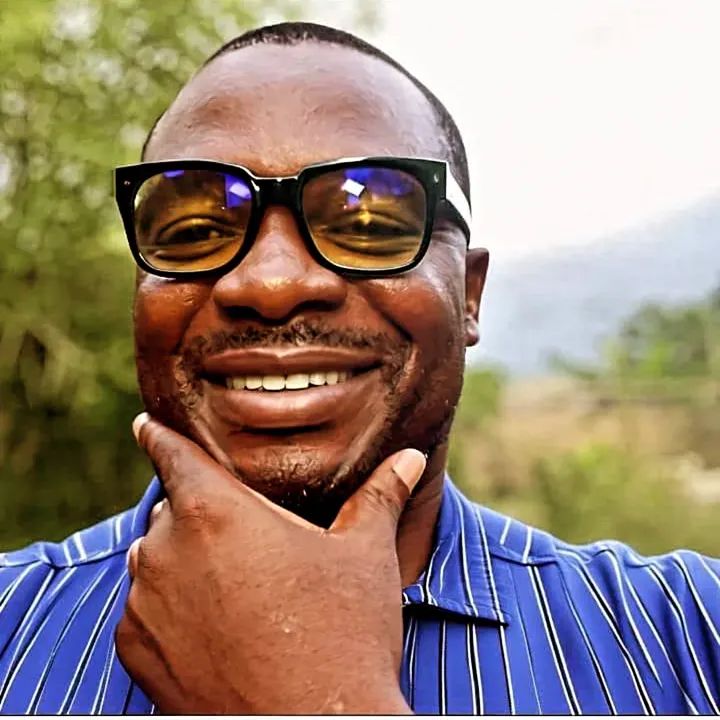
By Ewere Okonta
08037383019
eob.org.ng
Every year, on Father's Day, social media becomes flooded with beautiful photographs, heartfelt messages, and glowing tributes to fathers. Children celebrate their fathers. Wives celebrate their husbands. Churches offer prayers. Communities applaud fatherhood.
Then the day passes.
The applause fades.
The man returns to his daily reality.
He returns to the bills.
He returns to the responsibilities.
He returns to the expectations.
He returns to the silent burden of being a father.
Today, as we celebrate Father's Day, it is important to ask a controversial but necessary question:
Who takes care of the man who takes care of everyone else?
This question lies at the heart of the silent burden of fatherhood.
WHO IS A FATHER?
Biologically, a father is a male parent who contributes to the birth of a child.
But fatherhood is far more than biology.
A father is a protector.
A father is a provider.
A father is a teacher.
A father is a mentor.
A father is a counselor.
A father is a disciplinarian.
A father is a source of emotional security.
A father is often the bridge between childhood and adulthood.
A father is not merely the man who brought a child into the world.
A father is the man who remains present after the child arrives.
Many men have fathered children.
Not all have become fathers.
The difference is responsibility.
A man may create a child in one night.
It takes a lifetime to become a father.
WHAT IS FATHERHOOD?
Fatherhood is the lifelong commitment to nurture, guide, protect, provide for, and positively influence the life of a child.
Fatherhood is not an event.
It is a journey.
It begins at birth but never truly ends.
Even when children become adults, fathers continue to worry.
They worry about school.
They worry about careers.
They worry about marriages.
They worry about grandchildren.
They worry about the future.
A father's responsibility does not retire when he reaches sixty.
Many fathers continue carrying emotional burdens long after their children have left home.
THE UNSEEN PRESSURE OF MODERN FATHERHOOD
Society often speaks about the struggles of motherhood.
And rightly so.
Mothers deserve every praise they receive.
But society rarely discusses the struggles of fathers.
Many fathers are suffering quietly.
They are carrying loads nobody sees.
A father is expected to be strong.
A father is expected to provide.
A father is expected to solve problems.
A father is expected to remain calm during storms.
A father is expected to sacrifice his dreams for the family.
A father is expected to endure pain without complaint.
The moment he complains, society labels him weak.
The moment he breaks down emotionally, people ask:
"Why is he acting like that?"
The truth is that many fathers are exhausted.
Emotionally exhausted.
Financially exhausted.
Mentally exhausted.
Spiritually exhausted.
Yet they keep moving because people depend on them.
IS A FATHER AN ATM MACHINE?
Let us address the elephant in the room.
Many fathers today feel like human ATM machines.
When the phone rings, somebody needs money.
School fees.
House rent.
Medical bills.
Food.
Transportation.
Business support.
Emergency expenses.
The father becomes the first and last solution.
His value is often measured by what he provides.
Not by who he is.
Some children only call when they need money.
Some spouses only remember the father when bills arrive.
Some relatives see him as a walking bank account.
Nobody asks:
"How are you doing?"
"Are you okay?"
"How is your health?"
"Are you sleeping well?"
"What are your fears?"
"Who listens to your worries?"
This is one of the greatest tragedies of modern fatherhood.
A father should not be reduced to a wallet.
He is a human being before he is a provider.
He has feelings.
He has fears.
He has dreams.
He has struggles.
He deserves appreciation beyond financial contributions.
THE QUALITIES OF A GOOD FATHER
A good father is not necessarily a wealthy father.
Money is important.
But fatherhood cannot be bought.
A good father possesses certain qualities:
1. Responsibility
He accepts accountability for his family.
He does not run away from challenges.
2. Integrity
His children can trust his words.
He practices what he preaches.
3. Love
He demonstrates affection and care.
Children should never doubt that they are loved.
4. Presence
Being physically present matters.
Being emotionally present matters even more.
5. Patience
Children make mistakes.
A good father corrects without destroying.
6. Sacrifice
He places family welfare above selfish interests.
7. Leadership
He leads by example.
His life becomes a living lesson.
8. Wisdom
He provides guidance during difficult moments.
HOW TO BE A GOOD FATHER
Being a good father goes beyond paying bills.
Many fathers provide financially but remain emotionally absent.
A good father must:
Spend Time With His Children
Children spell love as T-I-M-E.
No amount of money can replace meaningful moments.
Listen More
Children need ears before they need lectures.
Listen to their fears.
Listen to their dreams.
Listen to their frustrations.
Teach Values
Character is more important than certificates.
Teach honesty.
Teach discipline.
Teach respect.
Teach kindness.
Be Available
Your presence during critical moments matters.
Attend school events.
Celebrate achievements.
Support them during failures.
Show Affection
Many fathers grew up believing that showing emotions is weakness.
It is not.
A hug can heal wounds words cannot.
THE HEAVY RESPONSIBILITY OF FATHERHOOD
Fatherhood comes with enormous responsibilities.
A father must provide.
A father must protect.
A father must guide.
A father must discipline.
A father must inspire.
A father must prepare children for life.
The burden becomes even heavier in difficult economic environments.
Across many countries, including Nigeria, fathers wake up daily wondering how to meet endless demands.
Inflation rises.
Costs increase.
Jobs become uncertain.
Yet society still expects fathers to perform miracles.
Many fathers are carrying financial burdens that would crush other people.
Yet they continue fighting because failure is not an option.
THE SILENT PAIN FATHERS DON'T TALK ABOUT
Many fathers suffer in silence.
Some are battling depression.
Some are battling anxiety.
Some are battling loneliness.
Some are battling health challenges.
Some are carrying emotional wounds from childhood.
Some are struggling with unemployment.
Some are terrified about the future.
Yet they remain silent because they believe nobody wants to hear their pain.
This silence is dangerous.
A society that ignores the emotional well-being of fathers is creating a crisis.
Strong fathers build strong families.
Strong families build strong communities.
Strong communities build strong nations.
FATHERS MUST LEARN TO TAKE CARE OF THEMSELVES
This is where many fathers fail.
They spend their entire lives taking care of everybody else.
They neglect themselves.
They ignore medical checkups.
They ignore stress.
They ignore exhaustion.
They ignore emotional pain.
They ignore mental health.
Until one day, their bodies revolt.
A father cannot pour from an empty cup.
Fathers must:
- Prioritize their health.
- Exercise regularly.
- Eat properly.
- Sleep adequately.
- Seek medical attention when necessary.
- Build supportive friendships.
- Talk about their struggles.
- Take occasional breaks.
- Develop spiritual strength.
Taking care of yourself is not selfish.
It is responsible.
WHO TAKES CARE OF THE FATHER?
This is perhaps the most important question.
Who takes care of the father?
The answer is:
All of us.
Wives must care for their husbands.
Children must appreciate their fathers.
Friends must check on one another.
Religious institutions must support fathers.
Governments must create economic conditions that reduce family pressures.
Society must stop treating men as machines.
A father deserves encouragement.
A father deserves gratitude.
A father deserves respect.
A father deserves emotional support.
A father deserves love.
Not because of what he provides.
But because of who he is.
A TRIBUTE TO FATHERS
To every father working late nights to pay school fees.
To every father skipping meals so his family can eat.
To every father carrying burdens nobody knows about.
To every father battling fear while pretending to be strong.
To every father driving taxis after office hours.
To every father working multiple jobs.
To every father praying secretly for his children.
To every father struggling but refusing to give up.
We see you.
We appreciate you.
We celebrate you.
You may not wear a crown.
You may not receive standing ovations.
You may not trend on social media.
But your sacrifices are shaping generations.
Your labor is building futures.
Your commitment is creating legacies.
Your love is changing lives.
FINAL WORD
Fatherhood is not merely about providing money.
It is about providing direction.
It is about providing values.
It is about providing stability.
It is about providing hope.
As we celebrate Father's Day, let us remember that fathers are not robots.
They are not ATMs.
They are not emotionless providers.
They are human beings carrying extraordinary responsibilities.
And perhaps the greatest gift we can give a father today is not another necktie, shirt, or Father's Day card.
Perhaps the greatest gift is to simply look him in the eyes and say:
"Thank you for everything you do. We see your sacrifices. We appreciate your love. And we care about you too."
Because behind every strong father is a man who sometimes needs someone to ask:
"Daddy, are you okay?"
Ewere Okonta is the CEO of EOB Media. He is a family values advocate. He writes from the Department of Business Administration, University of Delta, Agbor.
Comments (3)
God bless you, Sir.
I appreciate this good work.
May God Almighty strengthen you with wisdom and grace to excel in educating us on matters of great importance.
God bless you, Sir.
I appreciate this good work.
May God Almighty strengthen you with wisdom and grace to excel in educating us on matters of great importance.
God bless you, Sir.
I appreciate this good work.
May God Almighty strengthen you with wisdom and grace to excel in educating us on matters of great importance.
Leave a Comment