

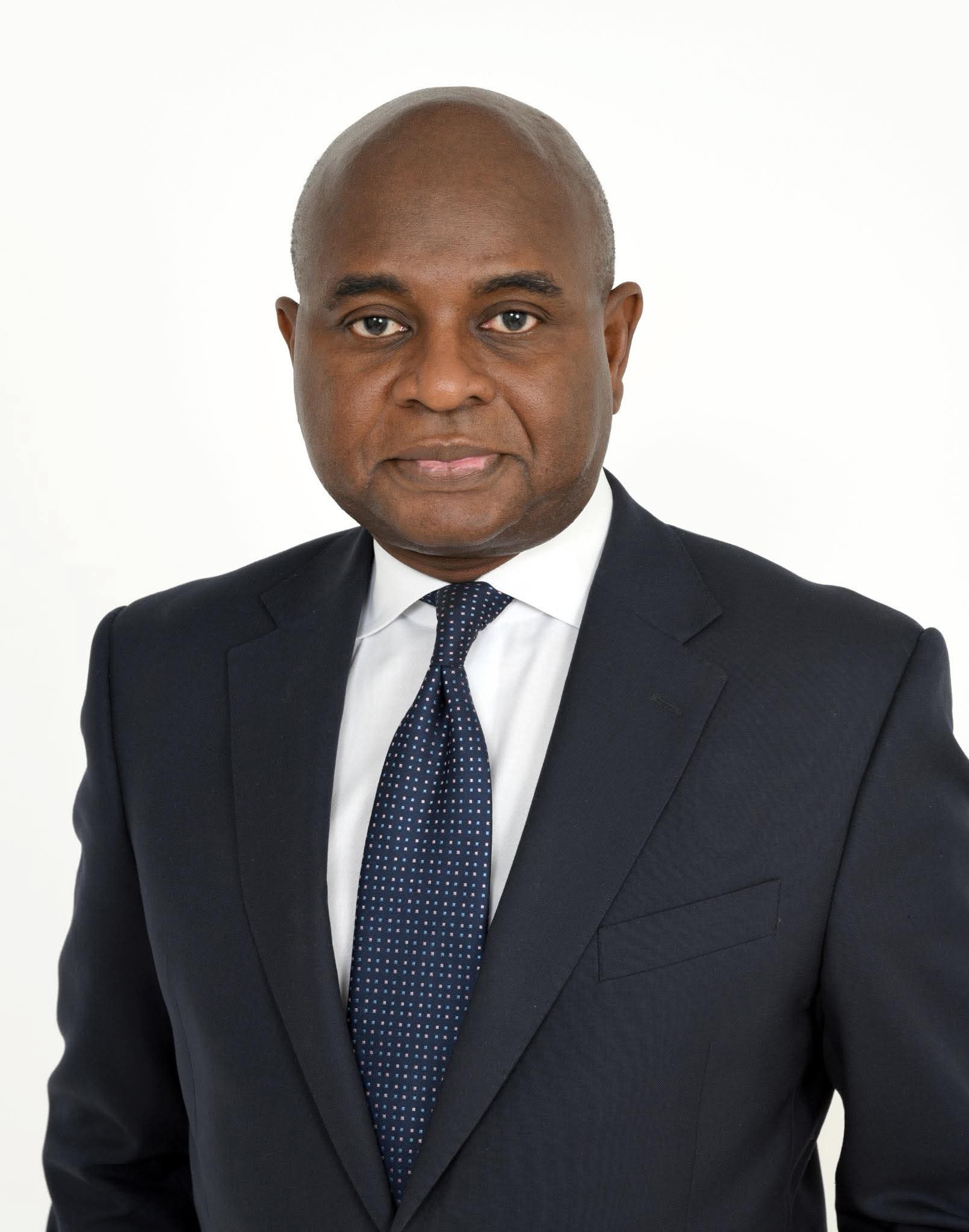
By Kingsley Moghalu
I often reflect on the difference between being and doing. Being, in the sense of rank, position or wealth. Doing, in the sense of concrete contribution to our society, through service that is public, private or nonprofit, that makes actual impact on the lives and welfare of the society as a whole or on individual lives. The two are not the same thing, but the rank or position or wealth we have can be utilized for doing, thus transcending merely being, where an individual is well motivated. In doing, we give of ourselves and our talents and strengths to uplift others through knowledge, hope, skill, illumination, or with strategic financial support where possible, or through philanthropy that delivers these and other outcomes such as social and physical infrastructure .
But when we have only rank, material wealth or position, and these opportunities are not deployed to lift up the society but rather simply for narrow self-benefit or enrichment , we wallow in a state of primitive accumulation (I own, therefore I am) without doing. One is a taker from the commonwealth. The other gives to the commonwealth.
This reality helps define the concept of “relevance” in developing societies such as ours in Nigeria. There are those who are “relevant” only when or because they are in public office or possessed of significant material wealth. But when they are no longer in these positions, no one knows or feels them. They are empty vessels, defined not by any substance which is not dependent on rank, position or wealth, but “defined” temporarily by something that is fleeting and ephemeral.
But the man or women of substance and talent is ALWAYS relevant, contributing to his or her society and a drive toward the progress of OTHERS in various ways - ideas that educate, leadership of organizations and associations outside of official power structures, advocacy for positive causes, leading or supporting community mobilization, social work, and so on. This is the socially valuable man or woman. He or she does not need to be “in office” to be relevant. If he or she were to be given official position, he/she defines the role, not the other way around. This is true greatness.
Unfortunately, our society itself misdirects recognition mainly to politicians and persons of wealth who may, in reality, be useless to their society. But we regard such people because, although we may sometimes be formally educated, we have become values-deficient, pauperized in thought and often in the pocket by the failure of the very people we worship- people who have a fleeting opportunity to lift up their society but focus on self-enrichment and aggrandizement.
I care more about what I DO than what I AM in terms of rank or position - although, fortunately, I have been additionally blessed with the latter. But because of my focus, I am never limited by money or official position. I have consciously pursued visions and goals, in or outside of formal positions or rank, that have enabled me to always be a positive contributor to society.
Whether as a young lawyer and journalist for then leading Newswatch magazine and as special correspondent for several foreign newspapers and magazines in the late 1980s, as a graduate student at prestigious universities abroad where I obtained my master’s and doctoral degrees, globally renowned institutions - The Fletcher School of Law and Diplomacy at Tufts University in Boston and the London School of Economics and Political Science (LSE), as a United Nations official for 17 years at duty stations across four continents and rising from entry level officer to the highest career bracket of Director, as a “knowledge entrepreneur” founding a global risk management firm in Geneva, Switzerland guiding multinational corporations into Emerging Markets, which led directly into my appointment by late Nigerian President Umaru Yar’Adua as Deputy Governor of the Central Bank of Nigeria from 2009-2014 where I supervised the implementation of extensive banking sector and payment system reforms including the introduction of the Bank Verification Number (BVN), my subsequent appointment at the end of my five-year tenure at the CBN as Professor of Practice in International Business and Public Policy at The Fletcher School at Tufts University, my presidential candidacy in 2019 which many assessed as the first seriously policy-driven, issues-driven -- not ethnic or religious considerations or political corruption — presidential candidacy in Nigeria since the return to democracy in 1999, my exit from Nigerian politics in 2022 and return to technocracy and international professional and thought leadership (my “original address”) and my subsequent appointment in late 2024 by African presidents as the Inaugural President and Vice-Chancellor of the African School of Governance in Kigali, Rwanda where I built up the graduate-school university of governance and public policy and established it fully under 12 months and returned to my global consulting and think tank leadership; my focus has always been the same: lead by serving, inspire by example and action, and with a clear vision, strategy, and a pathway to transformation. I believe in the 1920s motto of America’s E. W. Scripps Company, a media conglomerate (later adopted by Dr. Nnamdi Azikiwe, the Great Zik for his West African Pilot newspaper), to “shine the light that the people may find their way”.
As a global institutional and thought leader, my satisfaction comes from lives inspired, minds illuminated with knowledge that empowers, institutions or systems greatly improved and with subordinates built up and empowered to be leaders in their own right. In my roles as a sought-after international keynote speaker, I educate and inspire audiences from Africa to Europe, from North America to Asia. My satisfaction has never been embedded in some pompous official title worn on the shoulder (“do you know who I am”, in Nigerian parlance).
I am, always, intentionally impactful, with or without a formal title. But I also value the recognitions I have received without seeking - the Nigerian National Honor of the Officer of the Order of the Niger (conferred on me by President Goodluck Jonathan in 2012, the traditional chieftaincy title of Ifekaego of Nnewi Kingdom bestowed on me by Igwe Nnewi, HRH Dr. K.O.N. Orizu III in December 2020 ( a recognition from my people very close to my heart - but please don’t call me “Chief” 😀), the Doctor of Laws, LL.D. (Honoris Causa) conferred on me by Chukwuemeka Odumegwu Ojukwu University in 2017. The Fellowship of the Chartered Institute of Bankers of Nigeria (FCIB), the Good Governance Award of the Chartered Institute of Directors (CIoD) of Nigeria in 2024, the Rotary International Service Award, the Against All Odds Award by the African Women Economic Consortium decades ago, and many others.
I actually consider my three greatest achievements so far to have been (a) the establishment of the Isaac Moghalu Foundation (IMoF) in memory of my late father, which I did in 2005 with savings from my UN international civil service salary and not because I was financially wealthy - I wasn’t - through which my family has provided secondary and university scholarships to several vulnerable youth in my community, (b) earning my doctorate degree in International Relations from the London School of Economics, completing my doctoral dissertation in a record 12 months and shattering existing records at the University of London; and (c) my bestselling magnum opus Emerging Africa: How the Global Economy’s Last Frontier Can Prosper and Matter, a 400-page tome on economic strategy and statecraft published to global critical acclaim by Penguin Books in London, one of the world’s most prestigious publishers, in 2014. Emerging Africa and my other books (on International Law and Politics published by Stanford University Press in California and Palgrave Macmillan in New York, my “original” intellectual and professional life before central banking and economics) have been significantly influential globally and are required texts in numerous university classrooms around the world.
It’s not how many houses I have built (few). It’s not how many cars I own (again, few, but so long as I can get from here to there, what’s the problem?)
This is a personal reflection only, not a judgement on anyone. Lives differ. Circumstances differ. Anyone who makes honest money has the right to enjoy it as he or she wishes. Values can diverge, but we should seek the higher ones, I have always believed. And the greatest measure of our success should be, most importantly, our CONTRIBUTIONS in various ways, to leaving wherever we find ourselves a better place. The value we bring, and add, to the collective.
#IfekaegoNnewi

Comments (0)
No comments yet. Be the first to share your thoughts!
Leave a Comment