

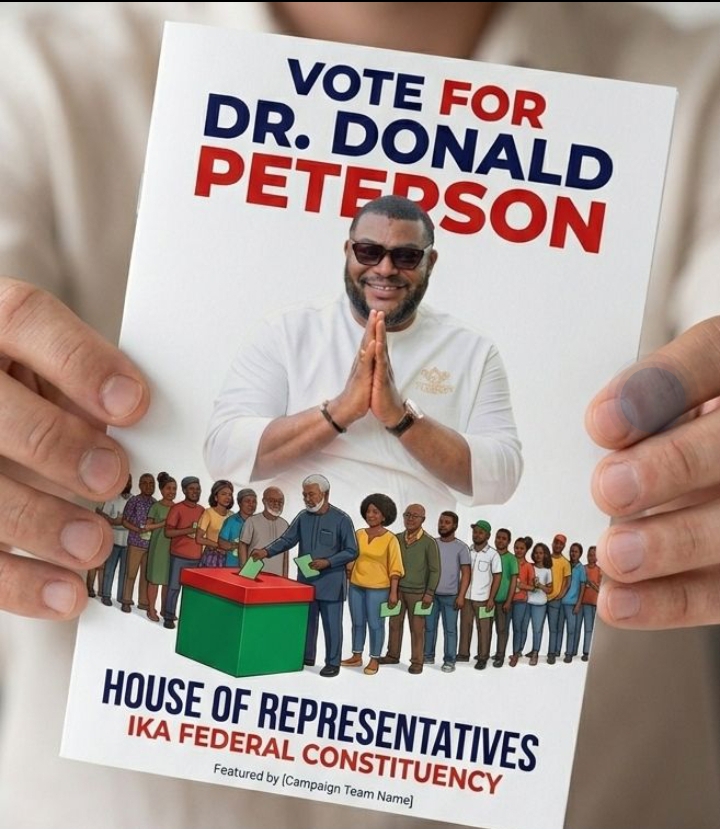
By Dr. Donald Peterson
President and Founder, The D’Peterson Foundation
The Divine Comedy of Commerce:
In the grand theater of capitalism, where dreams are currency and failure is the opening act nobody wants to star in, there exists a deceptively simple axiom that has launched a thousand ships and sunk just as many. "Find the need, fill the need" sounds about as revolutionary as suggesting we breathe air to live, yet watch any entrepreneur explain their "revolutionary" app that lets you rate your breakfast cereal, and you'll witness the spectacular gymnastics required to avoid this fundamental truth.
The entrepreneurial landscape is littered with the digital tombstones of startups that solved problems nobody had like a GPS for your refrigerator or a blockchain solution for organizing sock drawers. These ventures remind us that just because you can build something doesn't mean the world is desperately waiting for it, much like how just because you *can* put pineapple on pizza doesn't mean you should invite Italian grandmothers to dinner.
The Anthropological Approach to Need-Finding:
Successful entrepreneurs operate like cultural anthropologists armed with spreadsheets and an unhealthy obsession with customer acquisition costs. They observe human behavior with the intensity of Jane Goodall studying primates, except instead of documenting grooming rituals, they're documenting the seventeen apps people check before getting out of bed.
Consider Sara Blakely, who noticed that pantyhose feet looked ridiculous in open-toed shoes a problem so obvious that millions of women had simply accepted their fate like resigned passengers on a delayed flight. Her solution? Cut the feet off. This moment of sartorial rebellion birthed Spanx and turned her into a billionaire. The lesson here isn't just about hosiery innovation; it's about paying attention to the tiny frustrations that people have normalized into submission.
The art lies in distinguishing between genuine needs and manufactured wants. A genuine need makes people say, "Why hasn't someone invented this yet?" while a manufactured want makes them say, "That's... interesting, I guess?" The difference between these responses is roughly equivalent to the difference between finding water in the desert and finding a sommelier in the desert who insists on pairing your survival hydration with complementary tasting notes.
The Psychology of Problem Blind Spots:
Human beings possess a remarkable ability to adapt to inconvenience until it becomes invisible we're basically evolutionary ninjas when it comes to ignoring our own discomfort. We'll spend twenty minutes searching for our keys every morning for three years before considering a bowl by the door, because apparently we'd rather live in a perpetual state of low level chaos than admit we're forgetful creatures of habit.
This adaptive blindness creates opportunities for entrepreneurs who can see what others have stopped noticing. It's like being the only person at a party who realizes the music is terrible while everyone else has unconsciously started talking louder. The entrepreneurs who succeed are often those who refuse to accept "that's just how things are" as a satisfactory explanation for inefficiency, frustration, or unnecessary complexity.
Take the founders of Airbnb, who noticed that expensive hotel rooms and empty spare bedrooms coexisted in the same cities like ships passing in the economically inefficient night. While everyone else saw this as "the way travel works," they saw it as "the way travel could work differently." The result revolutionized hospitality and gave us the unique pleasure of sleeping in strangers' beds while hoping they weren't the type to install hidden cameras.
The Entrepreneurial Detective Story:
Every successful business begins with entrepreneurial detective work that would make Sherlock Holmes proud, if Holmes were particularly interested in profit margins and scalability. The clues are everywhere: people complaining on social media, inefficient processes accepted as standard practice, markets where the dominant solution hasn't evolved since the Clinton administration (pick one).
The investigative process requires what we might call "productive paranoia" the persistent feeling that everything could work better, coupled with the audacity to believe you might be the person to make it happen. This mindset transforms everyday frustrations into potential goldmines. Traffic jams become opportunities for ride-sharing algorithms, long restaurant waits inspire reservation apps, and the impossibility of finding a decent meal after 10 PM spawns entire food delivery ecosystems.
Reed Hastings famously conceived Netflix after being charged a $40 late fee for a VHS rental, a moment that perfectly encapsulates the entrepreneurial mindset: "This is annoying, expensive, and completely unnecessary in the age of technology. Surely there's a better way." The better way, as it turned out, involved mailing DVDs and eventually streaming content directly to devices, effectively destroying the entire video rental industry in the process. Blockbuster's shareholders were presumably less amused by this innovation than the rest of us.
The Innovation Paradox:
The most successful entrepreneurs often discover that the biggest needs hide in plain sight, disguised as "just the way things are done." They possess an almost childlike ability to ask "why?" in situations where adults have learned to shrug and move on. Why do we accept that buying a car should involve more paperwork than adopting a child? Why do we tolerate software that requires a computer science degree to operate? Why do we schedule meetings to plan meetings about scheduling meetings?
This willingness to question the status quo requires a particular form of intellectual courage the bravery to appear naive while everyone else nods knowingly about industry standards and best practices. It's the entrepreneurial equivalent of being the child who points out the emperor's nakedness, except instead of ruining a parade, you might accidentally create a multi-billion-dollar clothing company.
Consider how Elon Musk approached the space industry, historically dominated by government agencies and massive defense contractors operating with the urgency of geological processes. His apparently naive question "Why does it cost so much to put things in space?" led to reusable rockets and a fundamental reimagining of aerospace economics. Sometimes the most sophisticated solution is to ask unsophisticated questions.
The Execution Excellence Imperative:
Identifying a need represents approximately 10% of entrepreneurial success, which makes it roughly as valuable as knowing you're thirsty without knowing where to find water. The remaining 90% involves the considerably less glamorous work of actually solving the problem better than anyone else, scaling the solution, and convincing people to pay for it preferably before your savings account reaches levels typically associated with broke graduate students.
The gap between "good idea" and "successful business" is bridged by execution, which involves transforming insights into systems, prototypes into products, and enthusiasm into sustainable customer relationships. This phase separates entrepreneurs from people who have entrepreneurial conversations at cocktail parties but mysteriously never seem to launch anything tangible.
Jeff Bezos didn't just notice that people might want to buy books online; he built the infrastructure to deliver books reliably, expanded systematically into related products, and created customer service experiences that made people want to return. The insight was valuable, but the execution transformed a simple observation about commerce into one of the world's most powerful companies.
The Feedback Loop Mastery:
Successful entrepreneurs develop an almost supernatural ability to listen to what customers actually need rather than what they say they want a distinction crucial enough to determine the difference between revolutionary success and expensive failure. Customers can tell you their symptoms but rarely self-diagnose accurately, much like how people complain about wanting faster horses when what they actually need is automobiles.
This requires developing fluency in the language of unspoken needs, interpreting behavior rather than surveys, and recognizing patterns in complaints that reveal deeper systemic problems. The most valuable customer feedback often comes disguised as criticism, confusion, or requests for seemingly impossible modifications to your product.
Henry Ford's possibly apocryphal observation about faster horses illustrates this perfectly: customers knew they wanted to travel more efficiently but couldn't envision solutions beyond incremental improvements to existing transportation methods. The entrepreneurial insight involved understanding the underlying need faster, more convenient travel rather than the surface level request for equine performance enhancements.
The Risk-Reward Calculation:
Entrepreneurship requires making peace with uncertainty while maintaining enough confidence to invest significant time, energy, and resources into solutions that might fail spectacularly. This psychological balancing act resembles walking a tightrope while juggling except the tightrope is on fire, the juggling balls are made of your life savings, and the safety net is woven from optimism and credit card debt.
The most successful entrepreneurs develop sophisticated risk assessment capabilities that allow them to distinguish between intelligent risks and recreational gambling. They understand that the biggest risk often lies not in launching a venture but in failing to capitalize on genuine opportunities due to excessive caution or perfectionist paralysis.
This doesn't mean successful entrepreneurs are reckless; rather, they're calculated risk takers who understand that perfect information is a luxury unavailable to pioneers. They launch with sufficient preparation but insufficient certainty, knowing that market feedback will provide better insights than additional months of theoretical planning.
The Competitive Landscape Navigation:
Operating in markets requires understanding not just what customers need but why existing solutions fail to satisfy those needs adequately. This involves studying competitors with the intensity of military strategists while maintaining enough originality to offer genuinely differentiated value propositions.
The most successful entrepreneurs find ways to make competition irrelevant by redefining markets rather than simply entering them. They ask not "How can we compete with existing players?" but "How can we make existing players compete with us?" This subtle shift in perspective often leads to breakthrough innovations that create entirely new categories of products or services.
Netflix didn't set out to compete with Blockbuster; they created a different category of entertainment consumption that made physical video rental seem as antiquated as telegraph communication. By the time traditional rental companies recognized the threat, Netflix had already evolved beyond their reach into streaming territory that required entirely different infrastructure and expertise.
The Scaling Philosophy:
Building a successful business around need-fulfillment requires developing systems that can grow without proportionally increasing complexity or compromising quality. This scaling challenge separates businesses that remain interesting side projects from those that become sustainable enterprises capable of significant impact.
Scalability thinking influences every decision from initial product design to hiring strategies, requiring entrepreneurs to balance current needs with future capabilities. The most successful ventures are built with scalability assumptions embedded from the beginning, rather than trying to retrofit growth capabilities onto systems designed for smaller operations.
Amazon's early focus on building technological infrastructure that could handle exponential growth exemplifies this approach. While competitors focused on immediate profitability, Bezos invested in systems capable of supporting a much larger future business, accepting short-term losses in exchange for long-term competitive advantages that would be nearly impossible for competitors to replicate.
The Innovation Ecosystem Integration:
Modern entrepreneurship rarely involves isolated individuals creating solutions in garage laboratories; it requires understanding and leveraging complex ecosystems of suppliers, distributors, regulators, and complementary service providers. Success increasingly depends on orchestrating these relationships rather than simply developing superior products.
The most impactful entrepreneurs become ecosystem architects who create value not just through their core offerings but by facilitating better connections between various market participants. They understand that sustainable competitive advantages often come from network effects and platform dynamics rather than purely from superior technology or execution.
Apple's success with the iPhone illustrates this ecosystem thinking: they didn't just create better hardware but established an integrated platform connecting hardware manufacturers, software developers, content creators, and consumers in ways that created value for all participants while establishing substantial barriers to competitive replication.
The Legacy of Need-Fulfillment:
The entrepreneurial mindset of finding and filling needs ultimately represents a particular form of optimism about human capability and market responsiveness. It assumes that inefficiencies represent opportunities rather than inevitable features of complex systems, and that individual initiative can create positive change at meaningful scales.
This perspective transforms entrepreneurs into agents of systematic improvement, identifying friction points in human experience and developing solutions that make life more convenient, efficient, or enjoyable. The cumulative effect of countless entrepreneurs solving individual problems has fundamentally transformed how we work, communicate, travel, and entertain ourselves.
The businesses that endure tend to be those that solve real problems so effectively that we quickly forget how we managed without them. The ultimate entrepreneurial success might be creating solutions so seamlessly integrated into daily life that they become invisible like indoor plumbing or electricity, essential infrastructure that we notice only when it stops working.
In the end, "find the need, fill the need" represents more than business advice; it's a philosophy of engagement with the world that assumes problems exist to be solved, inefficiencies exist to be optimized, and human ingenuity can systematically improve the conditions of human existence. Whether you're developing the next revolutionary technology or simply organizing your sock drawer more efficiently, the fundamental principle remains the same: pay attention to what isn't working, and figure out how to make it work better.
The world is full of problems waiting for solutions, customers waiting for better options, and markets waiting for innovation. The only question is whether you're paying close enough attention to notice the opportunities hiding in plain sight, and whether you're brave enough to believe you might be the person to do something about them.
After all, every successful business started with someone who refused to accept that "this is just how things are" was an acceptable answer to preventable problems. The entrepreneurial mindset is ultimately about believing that "this is how things could be" might be more interesting than "this is how things are" and then having the audacity to prove it.
The Final Verdict: Your Move, Future Titan
So here we stand at the crossroads of comfortable mediocrity and uncomfortable greatness, where the road less traveled is paved with failed prototypes, rejected pitches, and the occasional stroke of genius that changes everything. The entrepreneurial path isn't for those who seek guarantees—it's for those who understand that the biggest risk in life isn't failure, but the haunting question of "what if?"
The world doesn't need another app that reminds you to drink water or a platform that connects pet owners with pet psychics. But it desperately needs solutions to problems that keep people awake at 3 AM, inefficiencies that drain billions of hours annually, and frustrations so common we've collectively decided they're just "part of life." Somewhere in that catalog of human annoyance lies your ticket to entrepreneurial immortality.
Remember: every empire started with someone who looked at an empty field and saw a city. Every revolution began with someone who refused to accept that suffering was inevitable. Every fortune was built by someone who understood that the phrase "nobody wants that" is often pronounced "nobody has offered that properly yet."
The beautiful irony of entrepreneurship is that while you're busy solving other people's problems, you're simultaneously solving the greatest problem of all the problem of not living up to your potential. Every need you identify and fill makes you more human, more connected to the shared experience of navigating this gloriously imperfect world we've built together.
Your future customers are out there right now, struggling with problems they've learned to accept, paying for solutions that barely work, and dreaming of something better while assuming someone smarter than them will eventually fix it. Plot twist: you might be that someone smarter. Or at least someone stubborn enough to try.
The question isn't whether opportunities exist they're everywhere, multiplying faster than rabbits in springtime. The question is whether you possess the rare combination of vision, persistence, and productive delusion necessary to transform "wouldn't it be nice if..." into "let me show you how this works."
So go forth and find those needs. Fill them with the enthusiasm of an overly caffeinated inventor and the precision of a Swiss watchmaker. Build something that makes people wonder how they ever lived without it. Create solutions so elegant that competitors spend years trying to figure out how you make it look so effortless.
And when you inevitably face the moments of doubt because you will, probably around Tuesday of every week remember that every "impossible" thing was impossible until someone made it inevitable. The world is waiting for your particular brand of productive obsession with making things better.
The needs are out there. The opportunities are infinite. The only variable left in this equation is you.
Now stop reading about entrepreneurship and go do some entrepreneurship. The world won't fix itself, and frankly, we're all counting on you to figure out the parts that are driving us crazy.
After all, someone has to.
Blessed Sunday Folks....



Comments (0)
No comments yet. Be the first to share your thoughts!
Leave a Comment