

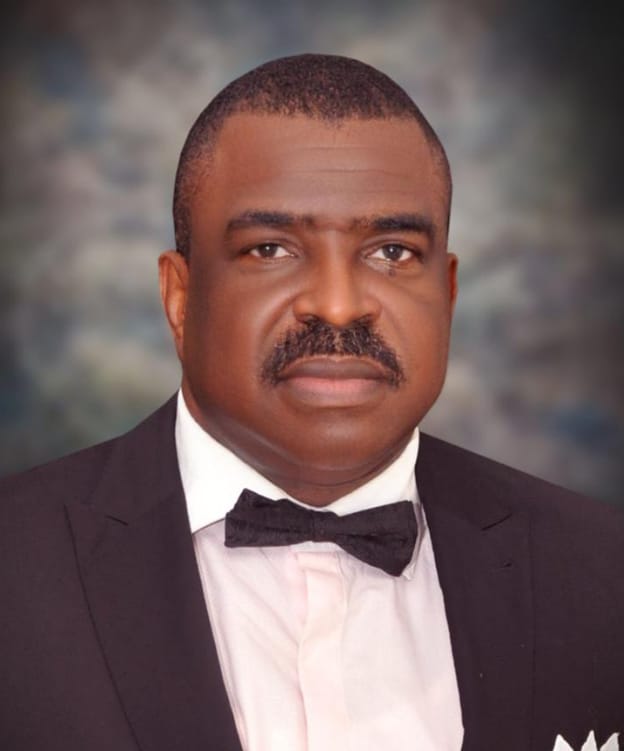
By Magnus Onyibe.
Apart from the raging debate on whether to retain or reverse the four (4) decades old petrol subsidy regime removed by President Bola Tinubu on the day of his innauguration, May 29, 2023, the presidential candidates of the various political parties seeking to replace the incumbent president Bola Tinubu as president of Nigeria and the All Progressive Congress , APC as the ruling party, have not so much bothered to tell Nigerians how they intend to make the economy better.
Ordinarily, since Nigeria is in economic doldrums which Tinubu’s challengers are alledging he plunged our country into, athough he has pushed back by reminding his accusers that he inherited a near comatose economy, the hot button topic that should have been fiecely debated ought to be how Nigeria can become a one trillon dollar economy in the year 2030.
Instead of challenging Tinubu’s projection of a trillion dollar economy in three (3) years by tasking him on how he intends to achieve the feat and thus compel him to prove his case with facts and figures, thereafter contradict his plans if they have superior pathways to a trillion dollar economy even earlier than the 2030 Tinubu is projecting, in the present unfolding season of political parties elections holding in January and february next year , Nigeria’s political atmosphere has practically been seized by political actors telling fairy tales of what they would do by outrightly reversing petrol subsidy removal or coming up with alternative approach to reforming the oil/gas sector.
It beats me hollow as it appears to me that the political actors scrambling to get into Aso Rock Villa in 2027 are trying overtly or covertly to give unwary Nigerians the impression that the scourge of petrol subsidy which has persited for over 4 decades is a new phenomenon in Nigeria.
Without a doubt,some of the flag bearers of the leading parties for 2027 presidential contest have expressed differing opinions on the economy, and they largely do not share the current administration’s optimism. But none has delved into how the economy can be grown into a one trillion dollar economy like its peer nation at lndependence lndonesia (similar population size of 283m ) which is currently a $1.45 trillion dollar economy with 18.50% of its economy underpinned by manufacturing which is an economic area in which recent data reveals Nigeria lags embarrasingly.
Without partisanship , about seven (7) months ago , l took on the task of examing president Tinubu’s plan to make Nigeria’s economy a trillion dollar one by 2030 which is in three (3) years time. It was published exclusively in Edgar Joseph’s wave making coffee table book. Since then, a lot of changes have happened in Nigeria’s economic space.
The nearly one year old essay is reproduced below for readers to be the judge on whether President Tinubu’s one trillion dollars economy dream is realiseable, on track, or otherwise.
——————————————-----'-------------------------------
Nigeria and the $1 trillion GDP dream.
By Magnus Onyibe.
( first published over 7 months ago)
Without stable electricity and quality road infrastructure, President Bola Tinubu’s dream of growing Nigeria’s economy to $1 trillion will remain elusive. In fact, it risks becoming nothing more than a mirage.
Recently, the International Finance Corporation (IFC), in partnership with the Canadian government, signed a $5 million agreement aimed at funding off-grid renewable electricity for millions of underserved Nigerians. This initiative is part of a broader IFC and African Development Bank (AfDB) strategy to expand electricity access to 300 million households across Africa.
Meanwhile, a World Bank development update underscores that for Nigeria to reach the $1 trillion GDP threshold, its economy must grow five times faster than its current pace. Presently, however, the country is growing at just 3.5% annually—one of the lowest rates on the continent, largely because Nigeria remains among Africa’s least industrialized nations.
Two major obstacles continue to stunt Nigeria’s industrial growth and economic potential: chronic energy insecurity due to insufficient and unstable power supply and poor infrastructure—particularly roads.
Recently, Minister of Power, Bayo Adelabu, stated that achieving stable electricity would require annual investments of $10 billion for the next 20 years. With over ₦4 trillion in debt owed to power generation, transmission, and distribution companies, Nigeria’s power sector is already in a deep financial crisis. As a result, achieving the $1 trillion GDP dream seems increasingly unrealistic—since industrialization, which is heavily dependent on stable power and infrastructure, is the main driver of GDP growth.
Unfortunately, the scale of funding required to stabilize electricity supply—as highlighted by Minister Adelabu—far exceeds what is currently available domestically. Nigeria’s public debt stands at over ₦144 trillion, with about ₦4 trillion spent annually on debt servicing. While the Director General of the Debt Management Office (DMO), Ms. Patience Oniha maintains that this level of debt is still sustainable, and serious concerns remain.
Chief among these concerns is the risk of government borrowing crowding out the private sector—a vital engine of economic growth. When entrepreneurs and private businesses are starved of access to financing, it undermines the government’s objective of accelerating GDP growth.
Currently, Nigeria’s GDP hovers around $200 billion, following a recent economic rebasing that saw the country fall from the top position in Africa to fourth place. Under these circumstances, the ambition of reaching a $1 trillion economy may begin to appear overly optimistic—if not outright unrealistic—unless significant reforms are undertaken.
Below is Nigeria’s current ranking among Africa’s top ten economies by GDP:
1. South Africa – $403 billion
2. Egypt – $380 billion
3. Algeria – $260 billion
4. Nigeria – $200 billion
5. Morocco – $157 billion
6. Ethiopia – $145 billion
7. Kenya – $116 billion
8. Angola – $113 billion
9. Côte d’Ivoire – $87 billion
10. Tanzania – $80 billion
The drop in Nigeria’s GDP ranking was largely due to a necessary rebasing exercise that hadn’t been conducted in over a decade. However, while Nigeria has lost ground in GDP terms, it still ranks second on the continent in terms of Purchasing Power Parity (PPP)—behind only Egypt.
While GDP measures the total value of goods and services produced annually, PPP accounts for the cost of living and the relative value of currencies, offering a more nuanced picture of real economic strength. Here’s how African countries rank by GDP (PPP) in billion international dollars:
1. Egypt – $12,370
2. Nigeria – $1,560
3. South Africa – $1,030
4. Algeria – $867
5. Ethiopia – $471
6. Morocco – $418
7. Kenya – $401
8. Angola – $392
9. Tanzania – $291
10. Ghana – $286
Despite this stronger PPP position, Nigeria still faces a challenging environment, particularly with foreign direct investment inflows drying up. These headwinds are part of a broader global economic strain triggered by a series of shocks over the past six years. It began with the COVID-19 pandemic, which severely disrupted global supply chains and has since been compounded by subsequent crises—including geopolitical conflicts and inflationary pressures
As it stands, Nigeria finds itself in a difficult spot. Without bold reforms in energy and infrastructure—and without innovative strategies to attract both domestic and foreign investment—the dream of a $1 trillion economy will remain aspirational rather than achievable.
A second major challenge facing Nigeria’s economic growth is the ongoing impact of Russia’s invasion of Ukraine, which began in February 2022—more than three years ago. The conflict has severely disrupted global logistics and trade, given that both countries are vital suppliers of energy, especially gas and oil, to Europe and the rest of the world. Ukraine, in particular, is also a key global source of grains such as wheat, further compounding the crisis.
The third and perhaps most overlooked obstacle is the disruption to global trade caused by sweeping tariff reforms initiated by the 47th President of the United States, Donald J. Trump. These changes have heightened global trade tensions, culminating in a tariff war between the world’s two largest economies—the U.S. and China—which nearly brought international trade to a standstill until a temporary 90-day truce was reached on May 12.
On a household level, Africa’s resilience has partly come from its diaspora. In 2023 alone, Africans abroad sent home an estimated $90.2 billion in remittances—roughly 5.2% of the continent’s GDP.
As traditional sources of capital grow scarcer, the Central Bank of Nigeria (CBN) has introduced an innovative initiative to bridge the nation’s funding gap: extending Bank Verification Numbers (BVN) to Nigerians in the diaspora. This policy is designed to simplify banking access for those working abroad, effectively transforming them into a reliable source of capital for the domestic economy.
According to recent data from the World Bank and CBN, Nigerians in the diaspora remit between $20 billion and $25 billion annually into the economy. However, many face significant challenges in accessing banking services in Nigeria due to the lack of BVN. By granting them access to this system, the CBN is removing a key barrier and potentially increasing remittance flows even further—possibly targeting $4 to $5 billion per month.
Though a proposed 5% tax on foreign remittances by the Trump administration could negatively affect inflows, the ability of more Nigerians abroad to easily open and operate bank accounts at home could offset that by expanding participation.
Another critical factor in achieving Nigeria’s $1 trillion GDP target is road infrastructure. When compared to South Africa—the African country with the highest GDP—Nigeria’s road network is grossly inadequate. South Africa boasts about 750,000 kilometers of roads, while Nigeria has just 195,000 kilometers—five times less. Roads, second only to electricity, are fundamental to a nation’s industrialization.
The current administration’s coastal road project, which stretches from Lagos to Calabar and spans most South-South and Niger Delta states, along with the Badagry-Sokoto highway connect North-CentralNorth-East regions, could be game-changers If executed efficiently, these projects would significantly boost economic activity across regions and help Nigeria move closer to its trillion-dollar economy target.
This deep dive into diaspora remittances and infrastructure underscores one thing clearly: without stable electricity, the $1 trillion GDP ambition will remain unattainable.
To illustrate the transformative power of stable electricity, consider the example of the Lekki Free Zone (LFZ) in Lagos—a model of what Nigeria’s industrial landscape could become. The zone operates around the clock—24 hours a day, seven days a week—thanks to its robust internal power generation capabilities.
According to Mrs. Adesuwa Ladoja, CEO of the Lekki Free Zone Development Company (LFZDC), the Lekki Deep Sea Port alone, generates 10,000 megawatts of electricity. The broader zone contributes an additional 12,000 megawatts to power various businesses, while Alaro City within the zone produces another 10,000 megawatts.
Outside of the free zone, the Dangote Refinery and Petrochemical Company—owned by Africa’s richest man, Alhaji Aliko Dangote—generates 570 megawatts of power, enough to serve the entire city of Ibadan and its surroundings.
Together, these internal power capacities have allowed the Lekki Free Zone, operational since 2023, to run 24/7—highlighting the indispensable role of electricity in driving industrial productivity and, ultimately, GDP growth.
The type of 24/7 electricity supply currently available in the Lekki Free Zone is exactly the model Nigeria must replicate nationwide if it hopes to leapfrog its economy into the trillion-dollar range. This is the standard that the World Bank’s representative in Nigeria has emphasized, stating that the country’s GDP must grow fivefold from its current trajectory to reach that ambitious target.
Today, the reality is far from ideal. Nigeria recently celebrated reaching 5.8 megawatts of electricity generation nationwide—a figure that is alarmingly low when compared to the estimated 33,000 megawatts needed to power the country effectively. Due to this shortfall, the economy operates at suboptimal levels, typically only active, between 6 a.m. and 6 p.m. This limited productivity window is a major reason Nigeria continues to underperform economically.
With such paltry power output, meaningful economic growth remains out of reach. It is only when the country can sustain 24-hour operations—with factories running non-stop and workers operating in rotating shifts—that the desired boost in GDP becomes attainable. Consider what increased electricity generation could mean for sectors such as healthcare, hospitality, and logistics—services that should be operational around the clock but are currently hampered by power insecurity.
Stable electricity would mean well-lit roads at night, trucks moving goods from factories to warehouses and retailers throughout the night, and fully stocked shelves ready for consumers each morning. This would generate jobs in manufacturing due to shift-based work schedules, more demand for truck drivers, and increased need for raw materials—whether they are sourced locally or imported. All of these activities would create a ripple effect, significantly boosting employment and productivity, thereby increasing Nigeria’s GDP.
Ultimately, this kind of economic expansion is what will move Nigeria closer to its $1 trillion GDP goal—a vision that aims to place the country alongside economies like Indonesia. It’s worth noting that both nations had similar economic standings at independence a little over six decades ago. They have similar population size-Nigeria is 220 million and lndonesia is 281 million.
Impressively,manufacturing contributes one-fourth to lndonesia’s GDP, and only a little over 8% is contributed by the manufacturing sector to GDP in Nigeria.
It is unsurprising that while Nigeria’s economy has largely stagnated, Indonesia’s has surged ahead to $1 trillion mark. Nigeria, by contrast, has seen its GDP fall from roughly $450 billion before the 2024 rebasing to just about $200 billion today. That is five times smaller than lndonesia’s.
However, if Nigeria can replicate the kind of industrial activity seen in places like the Lekki Free Zone on a national scale, facilitated by stable electricity and robust infrastructure,it would pave the way for significant GDP growth, potentially reaching the trillion-dollar mark envisioned by President Bola Tinubu’s administration.
Based on historical records it was only when China fixed her electricity shortage challenge through the three gouges dam that she surged past all the other countries to become the manufacturing hub of the world and second largest economy after the US.
A similar pattern applies to India which for a long time was suffering energy shortage, but after it overcame the challenge by massively and aggressively investing in energy security,she became the current fastest growing economy in the world.
But how can Nigeria achieve the scale of electricity generation, transmission, and distribution necessary to power this transformation into a one trillion naira economy as China and India have done?
The answer lies in a diversified mix of energy sources: hydro, gas, thermal, and, crucially, renewable energy—which remains vastly underutilized in Nigeria. The poorly executed unbundling of the power sector in 2013 has only complicated the landscape, and it will require strategic coordination and political will to untangle the mess.
Solar energy, in particular, is being promoted globally as a quick5-win solution, but in Nigeria, adoption has been sluggish due to the absence of meaningful incentives. This stands in contrast to other African nations like Egypt and South Africa, who are leading the charge in renewable energy adoption. Egypt, for instance, is home to one of the world’s largest solar parks and is now exploring offshore wind energy. South Africa, too, has built the continent’s largest renewable energy capacity, including major solar and wind projects.
Despite Nigeria’s status as a major oil producer and its vast renewable energy potential—particularly in solar, wind, and hydro—these resources remain largely untapped. Hence, she is missing in the list of the top 5 countries in Africa, leading in renewable energy adoption.
To reach its trillion-dollar target, Nigeria must integrate renewable energy development into its economic strategy. Yet, instead of encouraging adoption, the government is reportedly considering a ban on solar panel imports—despite the lack of sufficient local manufacturing capacity and minimal domestic uptake.
In countries where renewable energy has taken root, governments offer incentives such as rebates and subsidies to consumers to promote adoption. In Nigeria, the only visible support comes from a few banks—Access Bank, Stanbic IBTC, and Fidelity Bank—which offer consumer loans for solar energy installations. Beyond that, government policy has been largely silent.
In conclusion, President Bola Tinubu’s vision of a $1 trillion economy is not out of reach, but it can not be achieved through rhetoric or half measures. It requires deliberate planning, consistent implementation, and a supportive environment in which all components of the government work in synergy. By creating an integrated ecosystem that fosters productivity through stable electricity, infrastructure, and renewable energy adoption, Nigeria can finally position itself among the world’s rising economic powers and reclaim its leadership role on the African continent.
—————————————------------------------------------
The article above was written roughly seven (7)months ago, and a lot has happened in the Nigerian economy since that time. The evolutionary positive effect of the Dangote mega crude-oil refinery and petrol chemical facilty is the formost positive exemplar.
The net effect is that Nigeria’s current GDP growth is 4.43 % up from about 3.6 last year, and the foreign exchange reserve is currently at a healthy $54 billion mark. Remarkably ,for the first time in a long while, Nigeria’s economy is growing faster than the population, which is a good thing.
Crude Oil production has been ramped up to between 1.6-1.8 barrels per day even as incentives are being offered to lnternational Oll Companies, lOCs to produce more with a target of 2.5 million barrels a day in the same 2030.
Then minister of power, Bayo Adelabu has been relieved of the job and replaced by Joseph Tegbe who has brought in more verve ,just as the minister of works Dave Umahi has stated that more roads - 550,000 kilometres target including the coastal road from lagos to Calabar and the super highway from Badagary to Sokoto currently under construction are part of the effort to boost the road network which l had identified as constraints to the realization of the one trillion dollar economy dream.
The kilometers of roads targeted is up from the less than roughly 2,600 kilometers of roads he said he inherited.
If these data are verified, they appear to me like progress and indicate latent potentials to achieve the one trillion dollar dream with consistent effort by the Tinubu admistration.
So, it would serve our country better if the political actors currently jostling to replace Tinubu as the president of the federal republic of Nigeria in 2027, would shift focus from the over flogged issue of petrol subsidy removal and plan for reversal by the opposition to how Nigeria can grow its economy to support the populace by offering a strategy that is superior to Tinubu’s.
Magnus Onyibe, an entrepreneur, public policy analyst, author, democracy advocate, development strategist, alumnus of the Fletcher School of Law and Diplomacy, Tufts University, Massachusetts, USA, Commonwealth Institute scholar and a former commissioner in the Delta State government, (2003-2007) sent this piece from Lagos, Nigeria.
To continue with this conversation and more, please visit www.magnum.ng.

Comments (0)
No comments yet. Be the first to share your thoughts!
Leave a Comment